Flow, Fissure, Mesh

Home » Uncategorized (Page 8)

Category Archives: Uncategorized

Without Lou Reed Around

Here’s a short tribute piece, an elegy that came together quickly earlier this week – a small offering from a listener, in memory of.
Without Lou Reed Around
Without Lou Reed around
         the real world starts to feel
under rehearsed.
Without Lou Reed around
you’re going to get away
with less.
Without Lou Reed around
you’ll find out how much noise
those one-chord wonder boys won’t throw your way.
Without Lou Reed around to set you straight
you’ll wish you’d paid
a lot better heed the first time.
Without Lou Reed around
bootworn floorboards ought not
to rumble like the trashed cones of blown subwoofers.
Without Lou Reed around
any silk-screened bananas
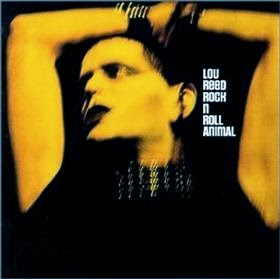
on leftover album covers will likely turn brown.
Without Lou Reed around
dog collars and lampblack lipstick
become a hard look to pull off.
Without Lou Reed around you’ll never know
whatever else it was you once
needed to know.


Short Conditional Take on Anne Carson

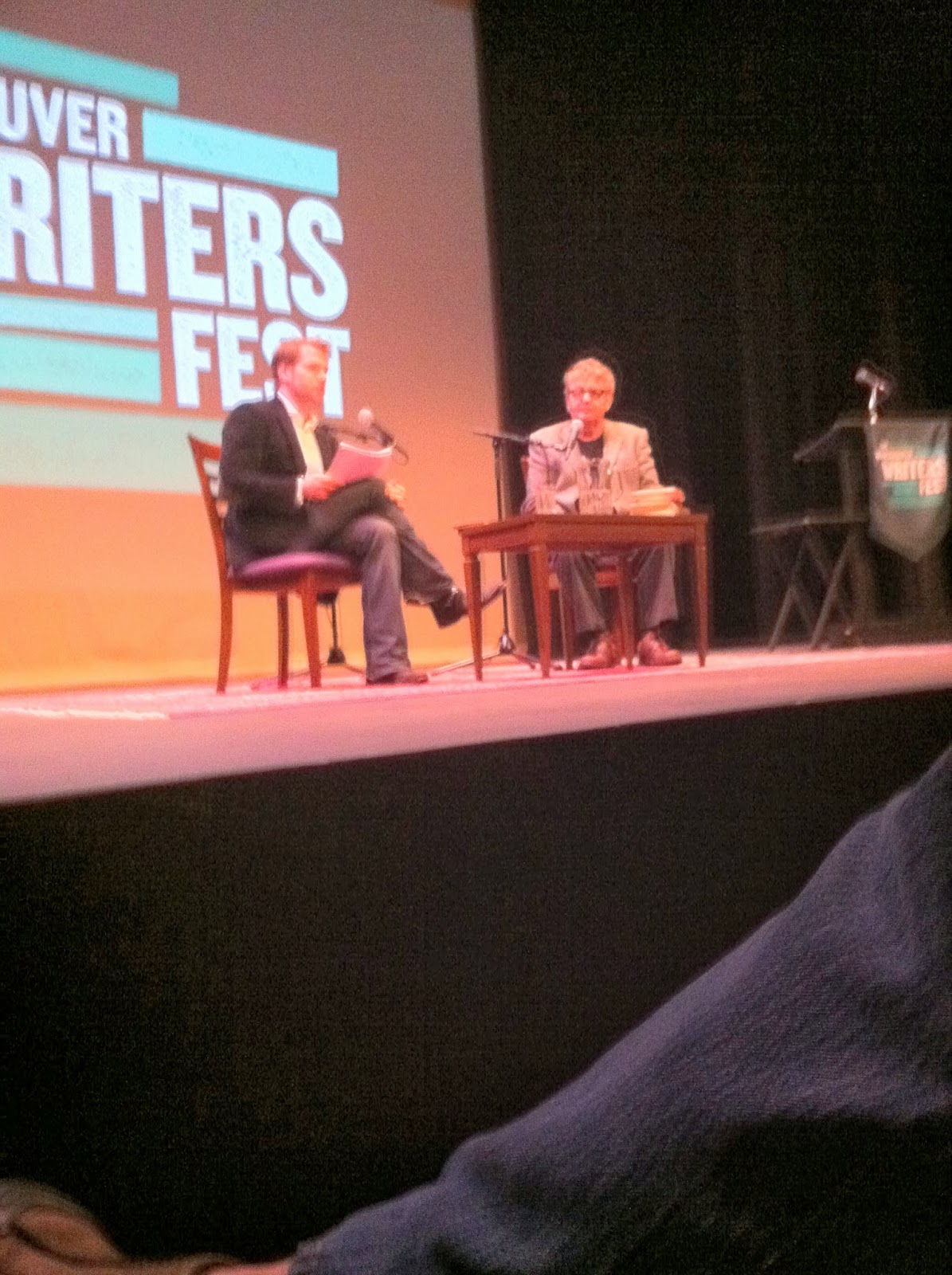
If I attended “An Hour with Anne Carson,” at the Vancouver Writers Festival yesterday.
If Aislinn Hunter introduced her, using the unlikely but nifty words “betweenity” (purloined from the Brontës’ letters, she said) and “blacksmithery” (source unclear).
If Aislinn Hunter spoke of Anne Carson’s writing’s “fierceness, a fearlessness framed in exquisite craft.”
If Anne Carson then said she had never had an introduction that used the words “betweenity” and “blacksmithery.”
If her miked voice had what seemed to me to be intensity in restraint.
If Anne Carson said she was glad to be back in Canada if only to get a proper bran muffin.
If she then read an essay written in a kitchen in Ontario in winter.
If it was called “Merry Christmas from Hegel,” and if it was, post Nox, a meditation on stillness.
If she admitted, perhaps untruthfully perhaps not, to not understanding Hegel.
If she said she will paraphrase Hegel badly.
If the essay described, with what seemed to me to be aching restraint, what she called “snow-standing” amid the stillness of conifers.
If the text only mentioned Hegel briefly.
If she wrote something like, “The world subtracts itself in layers.”
If she also described that subtraction as something like, “shadow on shadow in precise velocities,” which might be an image of Hegelian negation.
If she said afterward that she wouldn’t be able to answer any questions about Hegel.
If people applauded because it was a beautiful essay and her reading was very beautiful.
         If she then read an essay on a painting by Betty Goodwin.
If the essay was called “Betty Goodwin Seated Figure with Red Angle,” and if it was written for an issue of Art Forum.
If the right title is “Seated Figure with Red Angle (1988) by Betty Goodwin (by Anne Carson).”
If Anne Carson said, “The form is kind of whacked out.”
If by form she meant her essay not the painting.
If she also said that she wanted to find a form or a syntax that suited her own inability to have an opinion about Betty Goodwin’s painting.
If she never said, Ut pictura poesis.
If the form she chose was to write the whole thing in conditionals, seventy-three of them she said, including mention of horses and Freud, each of the seventy-three beginning with the word “if.”
If the idea was to open up to the sentence “the space in your mind that is prior to opinion.”
If I heard in her sense of “opinion” what Plato calls pistis, “belief,” a subordinate form of doxa, “opinion,” but she did not say this, and I may be both pretentious and wrong.
If she said her conditional essay “was fun to do but will be intolerable to listen to.”
If no one believed her when she said this.
If it wasn’t intolerable, not at all.
If she wrote, “If body is always deep, but deepest at its surface.”
If this made me think.
If she also wrote, “If artists tell you art is before thought.”
If by that she meant Betty Goodwin specifically, but I also took it to mean herself.
If everyone applauded again because she was wryly brilliant and provocative.
If she went on to read from Autobiography of Red and red doc>.
If there was more heartfelt applause.
If she took a bow.
If people asked her questions.
If she took another bow.
If she autographed my book, “Respectfully, AC.”
If I could thank her.

Short Take on Paul Muldoon Talking, a Précis

Paul Muldoon was interviewed by John Freeman on stage at the Waterfront Theatre at the Vancouver International Writers Festival this afternoon, and he’ll be reading as one of eight poets at the Poetry Bash tonight at Performance Works on Granville Island. He was asked right off the bat to talk about his collaboration with Warren Zevon, which resulted in a song, “My Ride’s Here,” the title track on Zevon’s last record (and was then covered for a posthumous tribute album by none other than Bruce Springsteen). Mr Muldoon said he “kind of went to school with Warren Zevon,” noting “just how difficult it is to write a song” to make it sound so effortless, and praising Zevon’s genius. He found himself, in composing his lyrics, trying to locate a raw, emotional “angle of entry” into a song. Asked to differentiate between poetry and song, he said:  “I suppose at some level the pressure per square inch in that [Muldoon’s lyric, ‘You Say You’re Just Hanging Out . . .’] isn’t quite what it could be in one of the poems.” At the same time, he said how he wants to realize his own desire for directness and clarity, which lyrics can so better “at some level.” He said he was still “struck by Seamus Heaney’s (I think) successful attempts to pick up Yeats’s suggestion that ‘Myself I must remake,'” and also declared that “poems are more evidently (not necessarily more truly) made out of the core of one’s being.” He described the impact of BBC radio on his desire for clarity and “the need to be direct.” At John Freeman’s request, he read “Wind and Tree” from his first collection: “In the way that most of the wind / Happens where there are trees, / Most of the world is centred / About ourselves.” He read from Madoc, noting as well that he was a “big fan of our friend Laurence Sterne” and how he had also derived a “fascination with lists” from Robinson Crusoe, Defoe’s interest in “stuff.” He said he encouraged his students to develop “a sense of the resonances of every word in a poem,” the specificity of language. He read his song-lyric, “Elephant Anthem,” and noted how he used to pore over lyrics printed on lp sleeves.

Audio: Carnets de Routes Improvisées

Here is an audio capture of a paper I delivered on Thursday, September 5, 2013 at the Colloquium of the Guelph Jazz Festival, which took place at the MacDonald Stewart Art Centre at the University of Guelph. It’s called “Carnets de Routes Improvisées: Transcultural Encounters in the work of Guy Le Querrec and the Romano-Sclavis-Texier Trio,” and, like the title says, it connects a number of recorded improvisations by a European trio around the African photography of Magnum photographer Guy Le Querrec to certain concepts of decolonization and latter-day ethnography. I try to suggest, in a limited utopian vein, how viable transcultural encounters might be realized through improvisation – not only musical, but visual as well. I also refer to the compelling historical work of Julie Livingston around biomedical practices in southern Africa, particularly her book Improvising medicine: An African Oncology Ward in an Emerging Cancer Epidemic (2012). This paper formed part of a two-person panel on media and transculturalism; the other presenter was Alan Stanbridge of the University of Toronto. The moderator for the session, whom you can hear offering an introduction at the beginning of this recording, was Nicholas Loess.
Here is the abstract for the paper:
Sponsored by French cultural institutions, the improvising trio of clarinetist Louis Sclavis, bassist Henri Texier and drummer Aldo Romano formed in early 1990 to undertake a tour of central Africa, including performances in Chad, Gabon, Congo, Cameroon and Guinea. Other tours would follow in 1993 and 1997. Despite both appearance and funding support, this group wasn’t engaged in officially-sanctioned cultural promotion, but had been conceived as an artistic and cultural project by Magnum photographer Guy Le Querrec, who appears to have wanted to chronicle in images the encounters of European jazz musicians with mostly rural African audiences. Le Querrec had already taken numerous photographic trips to North Africa—in 1969-71, 1978 and 1984, for example—trips that had produced significant images in his portfolio concentrating on both the troubling appropriations of ethnographic image-making and the complex challenges and impediments to transcultural understanding. His work with the Romano-Sclavis-Texier trio, now seen in retrospect, constitutes a deliberate post-colonial cultural intervention, a re-engagement by both aesthetic and documentary tactics in parts of the world from which colonial France had withdrawn. Le Querrec curates this particular tour of leading voices in French free jazz—he is listed on the recordings as a fourth member of the trio, not merely as a courtesy but as an active if tacit participant in the performances—for two main reasons. First, Le Querrec is one of the preeminent jazz photographers in Europe, and several of his collections centre on historic images of canonical jazz musicians. A 1997 show in Paris saw musicians (including Texier and Sclavis) improvising to projections of Le Querrec’s work; the show’s title, Jazz comme un Image, suggests how closely Le Querrec links his photography to improvisational musical (and visual) practices, a connection he further clarifies in an artist’s statement for the performance:
Être jazz c’est avant tout une manière de vivre, de se promener sur le fil du hazard pour aller à la rencontre d’un imaginaire qui contient toujours l’improvisation, la curiosité, qui oblige à écouter les autres, à les voir, à être disponible pour mieux les raconter en manifestant sa propre poésie.
This complex sense of likeness, at play in the overlap between rencontrer and raconter, to encounter and to give account, traces itself back in the context of French colonialism and ethnography to the Dakar-Djibouti expedition of 1931-33, and particularly the poetic-documentary writing of Michel Leiris in L’Afrique fantôme and L’Âge d’Homme, the latter of which in particular focuses on the Afrological substrata of jazz. Second, both the trio’s music and Le Querrec’s photography investigate the give-and-take, the tensions between re-appropriation and creative misprision inherent in this jazz-based transcultural model. The music on the three compact discs released by the trio (Carnet de Routes, 1995; Suite Africaine, 1999; African Flashback, 2006; each accompanied by booklets collating Le Querrec’s photographs from their 1990, 1993 and 1997 tours) does not come from their live performances, which seem (apart from the photographs) to have gone undocumented, but consists of recordings in a French studio after the tours were done, improvised reactions to the photographs as well as compositions that emerged from their African experiences. The “poetry” of imaginative encounter that Le Querrec describes is enacted musically (and even visually) in the extemporaneous negotiations of difference, and the creative troubling of Eurocentrisms, that these improvisations offer. Rather than reproduce the exoticism and even nostalgia that shapes late colonial, modernist ethnography, these audio-visual “records” investigate performatively how a transculturalism of shared differences, a contingent community of unlikeness, can be brought extemporaneously into being.

Philip Glass and Kronos Quartet: Music is a Place

Last night Christina and I attended “Kronos at 40,” a sold-out concert by Kronos Quartet at the Chan Centre at the University of British Columbia celebrating the string quartet’s 40th anniversary as a working unit. The programme, a gathering of contemporary work and commissioned arrangements of folk and roots music, was fairly typical – if anything Kronos does can be said to be typical – of what has become the quartet’s cultural mission: a strong commitment to fostering new, sonically-arresting, cutting-edge composition and to disseminating those often challenging soundscapes to as wide an audience as they can draw. That commitment was powerfully evident last night, for me, in the taut rhythmic virtuosity that each member of the group – David Harrington, Hank Dutt, John Sherba and new cellist Sunny Yang – brought to every piece they played. Whatever a composer’s method, approach, aesthetic, they were on it, utterly and unflinchingly. And after forty years, absolutely nothing about their energy, enthusiasm or dedication to all kinds of new music has diminished.
         Highlights from last night’s performance included a brief but wonderfully nuanced version of an arrangement by trombonist-improviser-composer Jacob Garchik of a blues by the little-known Geeshie Wiley, “Last Kind Words.” The unresolved subtleties and the powerful timbres of Wiley’s voice that ghost through the song’s surface-noise-laden original recording (from around 1930) are translated by Garchik into gently interlacing dissonances across a palette of strings, with Harrington’s violin taking a kind of vocal lead, weaving in and out of the other lines with a give-and-take that offers a present-day mirroring of the collaborative call and response of traditional African-American form. It worked brilliantly, I thought.  There were fine arrangements, too, of Iranian, Ottoman and Jewish songs, as well as electronically- and instrumentally-augmented compositions by Canadians John Oswald and Nicole Lizée, and by Serbian-born Aleksandra Vrebalov. They played three encores, arrangements of Greek and Columbian melodies and a killer version of what was has been their signature piece, Jimi Hendrix’s “Purple Haze,” complete with light-show and rumbling feedback: they rocked the house, really.
         The centerpiece of the concert was the world premiere of Philip Glass’s String Quartet No. 6, commissioned for Kronos’s 40thanniversary, as (according to the composer’s notes) “the most recent result of a long and ripening friendship between myself and the Kronos Quartet.” Before the concert, Eleanor Wachtel interviewed Philip Glass on stage at the Chan; the interview was being recorded for broadcast, she said, on CBC Radio on November 19, on Ideas. Their conversation concentrated on Glass’s history of collaborating with Kronos and with filmmaker Godfrey Reggio, particularly Glass’s soundtrack to Reggio’s The Visitors, but Glass also talked – very warmly and personably – about his own aesthetics, and his compositional style. He noted how Kronos’s “love and dedication” to the form “were unparalleled,” and said that the string quartet as a genre could create the “most intimate expression of a composer’s work,” allowing for “a maximum of density and clarity at the same time.” The quartet is “a prism through which the light of music can shine and be broken into colours.” He also noted how he has a difficult time extricating himself from the aural world of his music, of hearing his compositions – such as this new string quartet – from an objective outside: “I’m probably the person who knows least about what they sound like.” He also said he has been concerned with thinking about “where music comes from,” with “what music is,” and has decided that “music is a place . . . a real place,” defining “a consensual reality” that can be inhabited in composing and performing: in music, we become “citizens of the same country.”
         His String Quartet No. 6 opened a door into that place. The performance was about half an hour, and consisted of three movements, at tempos (maybe allegro -andante – allegro) creating a kind of envelope or frame that seemed to reflect a classical formalism; Glass mentioned Haydn in his earlier remarks, and there is something of Haydn’s structural symmetry carried forward in Glass’s writing. Glass also referred to the dynamic feel of Bartok, and it’s important to recognize that this sixth quartet also enacts a certain loosening in its textures, particularly around the dynamics; the hurried contrapuntal minimalism of his early work is moderated in this work into waves of surge and release, which Kronos managed brilliantly. In the third movement, I thought I kept hearing echoes of MGM-style film music, but afterward Christina told me she thought those were traces of Aaron Copland’s folk idiom and I think she was right – whether Glass intended these echoes or not, the work communicates a sense of a late Americana that is both moving and engrossing. It was a true privilege to be able to hear this music, and to hear Philip Glass speak. 

Short Take on What I Like Most about The Avett Brothers

Go back a little more than a year and a half ago, and I hadn’t even heard of The Avett Brothers. My wife had started listening to their music on the recommendation of a friend, and she found something they’d done earlier on for NPR, maybe a Tiny Desk Concert. I’ll have to look this up. Within a few days, and after a few repeat listens, she was definitely hooked, and so was I. We bought and/or downloaded a stack of their albums, and their tunes were on heavy rotation on the stereo. Their sound is obviously based in Carolina roots music and bluegrass; their core instrumentation – to which they strip down in concert, or else around which they build their band – is a trio of banjo, acoustic guitar and upright bass, played by Scott and Seth Avett and Bob Crawford. Joe Kwan’s cello has also added a key texture to their aural palette since the early days of the group’s existence, and when they perform the four of them tend to position themselves in a line across the front of the stage, Seth and Scott at the centre, flanked by the other two.
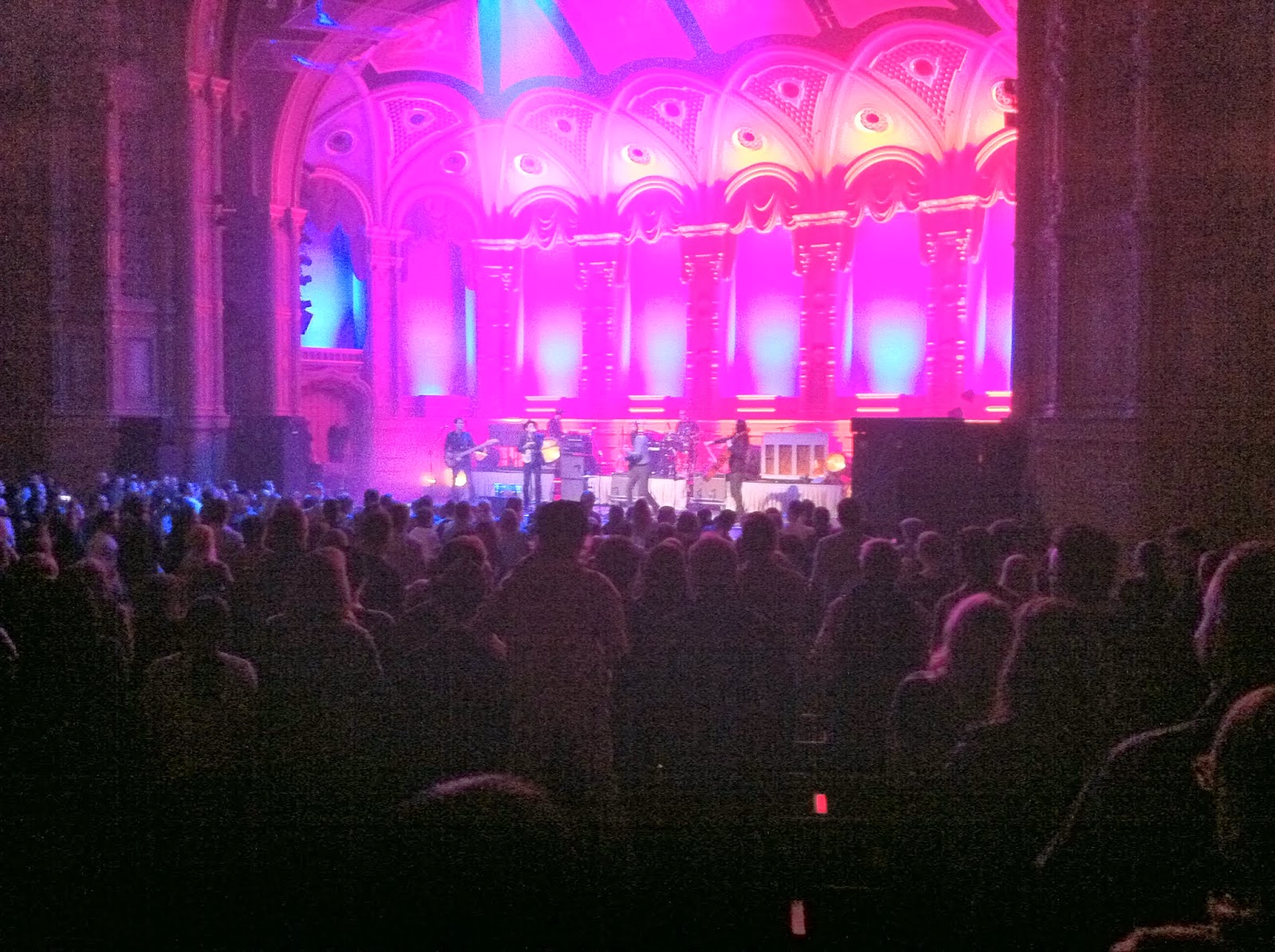
         We were given tickets to an Avett Brothers concert in June 2012, when they appeared as a headliner for the TD Vancouver International Jazz Festival. (Their music has little to do with mainstream jazz, apart from a few commons threads in Americana and the blues, but most jazz fest programmers these days rely heavily on non-jazz acts to bouy up revenues and draw in audiences. I actually ended up missing a Wayne Shorter gig to hear their show, but it turned out to be worth it.) We had great seats, a few rows from the stage. From the moment they hit, the energy in the house was through the roof. This was a couple of months, I think, before the release of The Carpenter, and they were testing out some of the more rock-oriented material from that album. It was my first experience of them live, and I have to say that I was unprepared for the exultant, keen and impassioned drive of their performance. They blew us wholly away.   
         In a recent interview in Rolling Stone, Scott, Seth and Bob talked at length about the band’s evolving sound, positioning them amid what Scott calls “the changing form of somewhere between rock and country and folk.” They refer back to a phrase coined by Scott – “young wonderment” – to describe the tenor of many of their lyrics, their music’s message maybe, but “young wonderment” also encapsulates the impact of their performances on an audience. There are certainly moments at an Avett concert of entrancing delicacy, something of “sparkly-eyed” grace and artful “shine” that their songs often both embrace and disparage: it’s what they want to make happen, but they also articulate a suspicion of being taken in by it, seduced by phony glitter and stagecraft. Still, despite the relentless apologies and self-recriminations in those songs – the admissions of failure and loss that seem pervasively to inform their writing – their performances take up a genuinely hopeful and affirmative trajectory. The youthfulness to which Scott refers isn’t a nostalgia for innocence or naïveté but a raggedly passionate energy. On Thursday night, seeing them for a second time at the Orpheum in Vancouver, I could feel the force of their convictions, their belief in what live music could accomplish. They jumped and thrashed, they caressed and kicked, they stroked and stomped. Sometimes rough, sometimes intimate, they drew from their twangling instruments a tangible sense of commitment, of being right here, in the moment, that moment, giving it whatever they could. The wonderment of the Avett Brothers has nothing to do with passive awe or amazement and everything to do with vitality and vigour, a fierce and embodied poetry. One review noted the “joyful buzz” they produced in the audience emerging onto the street after the show had ended. That feeling, that liveliness, the life-force they and their music seems to offer us as a gift, keeps going.

Audio: Nicole Markotić and Louis Cabri at Play Chthonics

Nicole Markotić and Louis Cabri read at Green College at the University of British Columbia last evening, as part of the Play Chthonics: New Canadian Readings series. This is an audio capture of their reading. They each offered new work, as well as material from recent collections: Cabri’s Poetryworld(CUE, 2010) and Markotić’sBent at the Spine (BookThug, 2012). (There’s a reviewof Bent at the Spine from rob mclennan’s blog; a review of Nikki Reimer from an April 2010 edition of The Globe and Mail might give some sense of Markotić’s poetics. Louis Cabri has an essay, “Unanimism and the crowd: Early modern social lyric,” in a 2011 issue of Jacket 2 that suggests some of the ways in which he combines poetics with critical-theoretical work.) They also took questions about their poetics. Thanks to both of them for their excellent, engaging readings. The recording, like the one from September also linked to this blog, is fairly vérité, with some air-vent noise in the background, but the voices come through very clearly. The introduction is by Andrew McEwan. Copyright remains with the authors. Sincere thanks to Green College for hosting this event and for providing generous support for the series, and also to the UBC Department of English.

Our Alice Munro

Most Canadian readers must be over the moon about Alice Munro, who was awarded the Nobel Prize for Literature last week. There’s a reactive cultural nationalism, no doubt, around the immediate rediscovery of her work, which was never really lost from view, never really in need to being recovered: Munro remains one of a handful of Canadian writers with a huge international profile. (The most-quoted blurb on Munro’s book jackets has to be from the American Cynthia Ozick, who famously called her “our Chekov”: every time I’ve seen that phrase quoted I have bristled, as I suppose many of Munro’s readers might – quietly, of course, the Anglo-Canadian way: just who is this “our” Ozick was talking about? Despite her long catalogue of stories in The New Yorker, Munro could never be taken for American.  If anything, the global enters Munro’s work through the awkward, partial lens of the local, the marginalized mundaneness of small-time Ontario or British Columbia life. Out there remains not quite here; Chekov is somebody you might read at school, and who comes from someplace else, somewhere more sophisticated, smarter, better.) What we tend to recognize, reading Munro, what we take to be “ours,” reflected back at us, is a wry, homegrown acuity – a passing and contingent certainty that these our seemingly unheralded voices might still have something to say, and something worth hearing about.
I first encountered Alice Munro’s writing in 1982, during a first-year English Lit survey course at the University of Western Ontario – which turned out, although nobody mentioned this at the time I don’t think, to have been her alma mater, or almost to have been, since she left university to get married in 1951 before finishing her prospective degree either in journalism or (like mine was to be) in English, depending on which sources you read. The course was team-taught by Richard Stingle, Donald Hair and – for one guest lecture – by the poet James Reaney, all of whom were immersed, critically at least, in the work of Northrop Frye; our reading list included Jay MacPherson, slices of Spenser, both King Lear and Twelfth Night, Reaney’s invocation to the muse of satire, The Waste Land, something from John Hollander (“Swan and Shadow”: classic), and a spate of poems and essays. I can’t remember if there was a novel or not. But there was Alice Munro: her first collection of stories, Dance of the Happy Shades, published in 1968.  My professors taught her writing as an example of Southwestern Ontario Gothic – the term is James Reaney’s, I think, and wasn’t given to me in that freshman class, but came out of a graduate seminar I took with him some years later. The idea, as Reaney put it, drawing heavily on Munro’s characteristically small-town, domestic mise-en-scène, was that there was something dark and unpleasant creeping under the flowery kitchen linoleum, a version of what Munro herself might come to characterize as the “open secrets” – the bad things everybody knows and no one can admit to knowing – that circulate with muted insistence around WASPish, repressed Canadian communities like her Jubilee, putatively a displaced rendering of Wingham, Ontario.
The story to which I gravitated most in Dance of the Happy Shades– it’s a great collection: early work, but in so many ways fully formed, shaped by a spare virtuosity – was the generically named “Images.” It involves narrative set-pieces that will soon become familiar to Munro’s readers: the forbidding marshland physiography anticipates the swampy grave of “The Love of a Good Woman,” and the muskrat trapping – echoing the mink farm of “Boys and Girls” – also prefigures the paternal farm of Lives of Girls and Women. In “Images,” we encounter (through the eyes of a young girl, out with her father) the figure of Joe Phippen, who wields a vaguely-threatening hatchet and lives in the cellar of his burnt-out family home off in the bush outside town. The story is built – as my Frygian professors no doubt insisted it must be – on Jungian archetypes. Joe’s house pretty obviously refigures the chapel perilous,  a trope derived from Arthurian quest romance, which as students of T. S. Eliot we had presented to us through Jessie L. Weston’s From Ritual to Romance. Here’s how Munro describes the entrance to his underground burrow: “We came out in a field of dead grass, and took a track across it to another, wider, field where there was something sticking out of the ground” (39). Something: hardly the highfalutin grandiloquence of some latter-day Chanson de Roland.  But the resonances and uneasiness build. We had been reading Sir Gawain and the Green Knight, too. “Mind your head here,” says Joe Phippen, the hatchet man, as they descend into his dark space. He’s an Anglo-Ontario clone – the settler-culture, second-hand version – of an English green man, a latter-day Wodwo.
Here is how Ted Hughes renders the chapel perilous in his translation of the poem from Middle English (we used another, more scholarly version – not Tolkien, either):
Still he could see nothing. He thought it strange.
Only a little mound, a tump, in the clearing,
Between the slope and the edge of the river, a knoll,
Over the river’s edge, at a crossing place,
The burn bubbling under as if it boiled.
[. . .]
Shaggy and overgrown with clumps of grass,
It had a hole in the end, and on each side.
Hollow within, nothing but an old cave
Or old gappy rock-heap, it could be either, or neither.
                                    (Hughes 1187)
Munro’s tump relocates – and dislocates, too – her Anglo-Celtic image pool, her genetic word-hoard. ‘Images” read this way appears to offer an unresolved passage through a waste land, a katabasis from which we cannot quite extricate ourselves – an epigone modernity, maybe. “Surely,” Hughes’s Gawain muttered, “This is desolation.” But Munro finds something else in the recounted experience as well. She must. Because what I remember most about this story is peculiar and strangely familiar detail: the candies. “Let’s see,” says Joe Phippen, down in his basement home,
“what’ve we got for the little girl to eat?”  Nothing, I hoped. But he brought out a tin of Christmas candies, which seemed to have melted then hardened then melted again, so the coloured striped had run. They had a taste of nails. (41)
Joe Phippen is a kind of anti-Santa, a figure of decimation, of bad remainders, rather than of plenitude. Munro’s prose neatly reproduces the melted fusion of the candies when she lifts out commas and lets the girl’s words blur a little – a hallmark of writerly skill, of craft. But what sticks with me aren’t the descriptive tactics, but a palpability: the taste of nails. How does this girl know what nails taste like? And how do I? Is this the taste of blood? Of poison? Do the nails suggest violence? Crucifixion? Industrial detritus? What this phrase recalls, for me, isn’t necessarily a shared “deep” image-pool, but a kind of reactive resistance built into that sharing, an experiential dissonance. The story ends with the child-narrator’s out refusal to accept the archetypal terms of the katabatic narrative, a kind of deliberate un-likeness:
Like the children in fairy stories who have seen their parents make pacts with terrifying strangers, who have discovered that our fears are based on nothing but the truth, but who come back fresh from marvellous escapes and take up their knives and forks, with humility and good manners, prepared to live happily ever after – like them, dazed and powerful with secrets, I never said a word. (43)
We are both made by our stories, and by our refusal to tell them: for Munro, we don’t consist of our globally-shared typologies, or common fairy tales, but by what remains outside of telling, just beyond the dark reach of words. We are alike in our unlikeness. Munro’s sense of place, of belonging in and to a distinctively Anglo-Canadian experience, isn’t a case – as James Reaney might have put it, of re-making the global in the image of the local, but instead of resisting from within its deterministic narrative pressures, of working our way into and through its gappy cracks.
Books
Ted Hughes. Collected Poems. Ed. Paul Keegan. New York: Farrar
Straus Giroux, 2003. Print.
Alice Munro. Dance of the Happy Shades. Toronto: McGraw-Hill
Ryerson, 1968. Print.

Audio: Kathleen Jamie’s "Sabbath"

Because of time constraints, I wasn’t able to finish my lecture to my first-year class on Prose Non-Fiction at the University of British Columbia on Wednesday, October 3, 2013. I was set to talk about Kathleen Jamie’sessay “Sabbath,” from her collection Findings(2005), but I had to finish up some discussion of Marjane Satrapi’s Persepolis. So, about a week later, I have tried to wind things up with this improvised audio podcast. I was talking in my lecture about forms of framing, and frame narrative, as well as Satrapi’s sense of a divided subject, and I wanted to dovetail some of these ideas into my reading of Jamie’s brilliant essay. One recurrent theme in Jamie’s work is the shortfall of language — she suggests that poetry, that writing itself, emerges from (and in) this shortfall. Instead of a frame, she creates a kind of frayed, open-ended counterpoint in “Sabbath.” She addresses the complexities of place and displacement, of the monumental and the entropic, of the global and the local, and the challenges of translation, of multiple, partial and incommensurate discourses. And she does all this in a language that is limpid, engaging and open-hearted.

Drummerless, on Paul Motian

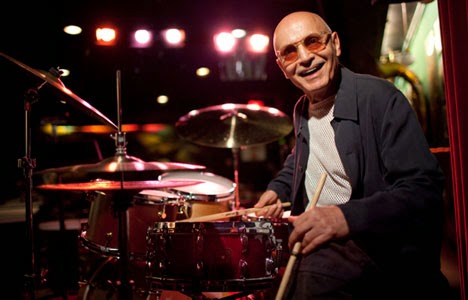
I have been trying for some time to find proper, better words to describe what has now come to seem like my own very long commitment to the music of percussionist Paul Motian, who died nearly two years ago. His particular feel, the way in which his music characteristically unfolded and continues to unfold, sui generis, both temporally and spatially, has had a sustained effect on how I have begun to think about the poetic apprehension of time, the material experience of the human body in its textiles, its welter and wash. It sounds so generic, so mundane, so less than momentous, to say: for some time. And maybe I only mean to play on the titles of some of Motian’s compositions, which also both thematize the experience and elegize the ineffability of the temporal: “It should have happened a long time ago.” So I feel like I’m trying here, but inevitably falling short, even before I seem able to get started. But I think that this halting phenomenology might have something to do with the specifics of Paul Motian’s sound. Because there’s a semantic and temporal gap, a kind of hiatus particular to Motian’s sense of line and rhythm, that opens around the question of the thesis, Θέσις: of the subtle incursion of, say, a dancer’s footfall, of the give-and-take around every singular, embodied, creative pulse, step upon step. In Motian’s playing, each beat, each thesis, doesn’t drop into the lockstep of fixed metre, even when he plays in time, but tends to exist as a stroke, a temporal marker, relative only to the beat that preceded it; Motian always seems to be feeling his way forward through time itself, testing its viscosities, its resistances, its eddies, its flows. His sense of measure is tensile, and a little precarious: simultaneously countable and protean, refrained and free.
         I have been listening to Shadow Man, the second recording by Tim Berne’s Snakeoil quartet released (last week) by ECM records. I haven’t made it through to the end of the CD yet, because each time I put it into the player, I’m brought up short by the third track, a duo version – by Berne on alto and Matt Mitchell on piano – of Paul Motian’s composition “Psalm.” I had forgotten that Motian played on Berne’s Mutant Variations  and The Ancestors on Soul Note (both 1983) and also on his early Songs and Rituals in Real Time (Empire, recorded 1981); their musics, even then, appeared to share something of a preoccupation with rhythmic knotting and unknotting. In a 2009 interview with Ethan Iverson, Berne describes his first encounter with Motian:
I met Paul Motian when he was doing a gig with the bass player Saheb Sarbib.  And I just went up to him and I asked him.  And to this day I have no idea how I got the nerve.  But he sort of said “Yeah, man, send me something,” or whatever.  I may have given him a record or sent him a tape.  I called him up a couple of weeks later and asked him if he listened to it, and he said “No.” But then he said, “Yeah, whatever, I’ll do the gig.” And that was this gig that turned into this record. . . . And Paul was great.  I don’t know why I didn’t know to be more frightened.  I think I got more terrified when we did a tour, because then I was like “Holy shit, I’m on the road with Paul Motian.” There are two Soul Note records with Paul too, and he plays just great on them.
Berne’s version of “Psalm” offers a lyrical tribute to this yes-and-no meeting, but, fittingly, also audibly remarks on Motian’s posthumous absence: it’s performed drummerless, and fluidly rubato. (Notably, Russ Lossing has also made a brilliant solo piano CD of Motian compositions, Drum Music [Sunnyside, 2012], that theatizes the composer’s absence in a similar fashion, but which is also wonderfully attentive to the prod and pull of Motian’s lines.) The openness and the looseness of the duo’s time feel is wholly appropriate to Motian’s music. The melody, lightly fragmented by Mitchell’s right hand, is not especially definitive, and seems to emerge, to find its feet so to speak, out of an undifferentiated gentle swathe of long tones, here played sotto voce by Berne; on the original version by the Paul Motian Band – “Psalm” is the title track and the first cut on Motian’s 1982 ECM lp – the core line of the song (and many of Motian’s compositions consisted of not much more than melodic fragments) wells up tenuously from layers of saxophone, guitar and bass. In his liner notes to the ECM boxed set of Motian recordings that appeared earlier this year, also from ECM, Ethan Iverson describes how “Psalm” “begins like an emission from deep space before a chorale comes into focus.” And he’s not wrong: Iverson has keen, practiced ears, and he hears a kind of primal rhythm behind all of Motian’s playing, a well-defined, historically-informed sense of jazz time: “With Paul,” he wrote in a New York Times obit,“there was always that ground rhythm, that ancient jazz beat lurking in the background.” But I’m not sure I agree with him, or, at least I don’t know if I hear the same sense of beat he does. For me, Motian’s playing, at its best, digs into that ground, destabilizes it, turns it over. His time extends, distends, undoes and reknits the whole sense of primal beat, of pulse.  In the Berne-Mitchell version of “Psalm,” I think, a pliable tactility – the gesture toward measure and the soft refusal to fall into a countable frame – manifests, and reminds me, as I listen, of the ways in which Motian’s music wants to open both into time and out of it: to extemporize. That opening – sensible as hiatus or absence, certainly, but also as push, as motion, as the forward heft of a given line – seems to me to form a crucial aspect of Paul Motian’s legacy.
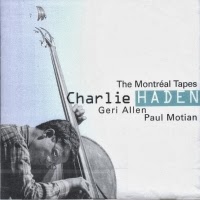
         One more brief note. I only saw Motian play live once, in Montreal in 1989 during the Charlie Haden invitational series early that July. I was at the gig – released as part of The Montreal Tapes – by the Haden-Motian collaborative piano trio with Geri Allen. What I remember most about that concert was that it was over too soon. There wasn’t enough time. It slipped away. Motian’s warm, flexible rhythmic touch is in evidence from the very first notes, on Haden’s fittingly titled “Blues in Motian.” I feel like I need to listen to that record again.