
Home » Posts tagged 'improvisation' (Page 3)
Tag Archives: improvisation
Remembering Introducing Fred Ho (August 10, 1957-April 12, 2014)
I only met Fred Ho once, when I was asked to introduce a talk he was giving — “Identity, Music and the Asian-American Struggle” — in the afternoon of Saturday, February 2, 2002, at the Western Front here in Vancouver. His presentation was highly charged, as full of strident compassion and of life-energy as his music. After the talk, he asked me if he could have a copy of the introduction, and I gave him mine, which had some handwritten notes and corrections. Later, I was contacted to contribute to an anthology of writings about his work, a kind of Festschrift for him, but I never managed to get anything properly together enough to submit; in 2007, I presented an abbreviated version of my work on him as a paper at the academic colloquium attached to the Guelph International Jazz Festival, “Improvising Diaspora: Fred Ho, John Coltrane and the Music of Radical Respect,” the text of which I have posted on my other blog, Frank Styles. This past week, I have been digging through my files to find the text of my introduction, and have finally come across it today. I’ll reproduce it below. I mention how Julie Smith, then the director of educational programming at Coastal Jazz, was working to create a symposium alongside the Time Flies music festival. Now defunct, Time Flies was modelled on Derek Bailey’s Company, an aggregating of free improvisors for a week of performances in ad hoc groupings and ensembles at the Western Front. The symposium eventually led to the Creative Music Think Tank and then, in 2007, to the first of a set of yearly colloquia in Vancouver produced collaboratively by Coastal Jazz and the Improvisation, Community and Social Practice research initiative (ICaSP). Here is the text of my introduction for Fred Ho. I remember him well.
It’s a great pleasure for me to introduce Fred Ho today.
This presentation is the first of the Time Flies Talks, a series of lectures and panels that we hope to develop into a fully-fledged symposium on improvisation and cultural theory next year, during the Time Flies Festival of Improvised Music. This year, to help inaugurate the series, we will also have a panel discussion on “How Time Flies in Improvisation,” featuring musicians Marilyn Lerner and Torsten Muller, and CJBS Artistic Director Ken Pickering, and moderated by me. It will take place here this coming Friday, February 8, at 2:00 pm; admission to the panel is free. Special thanks should go to Julie Smith, who has put these events together.
Fred Ho’s music has been described both as “politically charged,” brimming with “slashing energy” and fierce ironies, and as delicately lyrical, organic, graceful, life-affirming. His work offers a provocative mixture of idioms, drawing on — among other influences — free improvisation, traditional Chinese music and what Rahsaan Roland Kirk once described as “Black Classical Music.” His artistry seems to me to embrace both contrariety and multiplicity. Titles such as “Contradiction Please! The Revenge of Charlie Chan” signal his oppositional political stance, his keen awareness of the fraught dynamics of racial and ethnic identity among North American listeners, as well as a darkly comedic recognition of the exclusive and proprietary nature of cultural and musical stereotypes (not to mention a pun on one of bebop’s most famous pseudonyms). But his music and his thought are not simply directed at resistance to racial and social hegemonies; he is also deeply concerned with, as he has put it, “creating revolutionary aesthetics and changing the relations of cultural production”: with affirmation, with liberation, with creation. Fred Ho’s work seeks out a formal connection between the demands of musical form and the politics of gender, race, and class in a difficult and marginalizing world. The excluded, the marginal, the unacknowledged, sing back and sing out in Ho’s music, laying claim to agency, to presence, to immediacy — making themselves heard. His goal, he has written, “is a radical unity of form and content.” By this he means, I think, that the material lived conditions of social and cultural oppression can be engaged, countered and overcome in radical cultural forms, such as improvisation, that insist on a political dimension in the very substance of their articulation: in sound, in rhythm, in tone — in shout, cry, and caress. Fred Ho is a major artist, and a significant force in the emergence of a multicultural aesthetics. His many recordings and performances with his Afro Asian Music Ensemble, with the Monkey Orchestra, with the Brooklyn Saxophone Quartet, among other incredible ensembles, as well as his numerous publications, lectures and academic residences testify to his formidable energy and dedication to the political work of making music. Fred Ho is a performer, composer, pedagogue, political activist, in short an artist to be reckoned with, who calls us to reckon with ourselves and the world we inhabit. He will speak today on “Identity, Music and the Asian American Struggle.” Please welcome Fred Ho.
Occupations: Wadada Leo Smith’s Ten Freedom Summers
 |
| Wadada Leo Smith speaking to the audience in Guelph after the performance of Ten Freedom Summers |
Steve Lacy’s Tips: Scott Thomson and Collaborators at Guelph (2011)
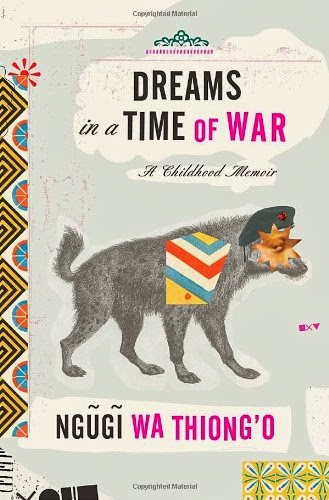
Ngugi wa Thiong’o: Memoir as Self-Translation (Lecture Notes)
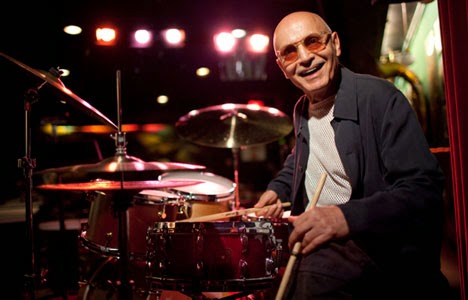
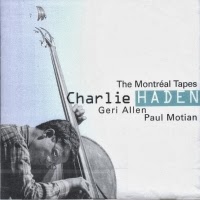
Drummerless, on Paul Motian

Wisdom of William Parker, Musician
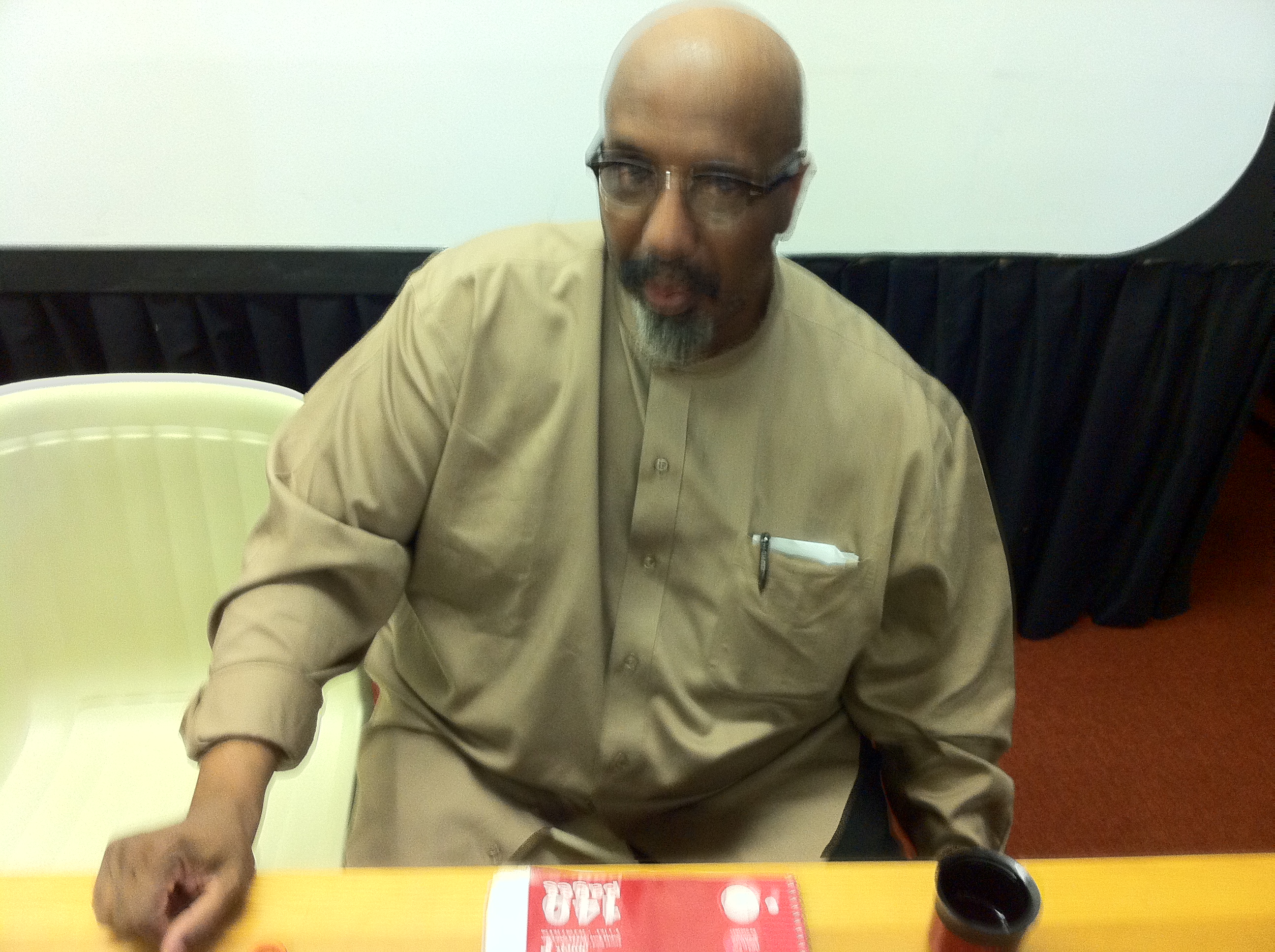
In the late afternoon of Thursday, September 5, at the Macdonald Stewart Art Centre at the University of Guelph, composer and bassist William Parker delivered a keynote talk for the Guelph Jazz Festival Colloquium (this year’s theme: “Sound Knowledges: A World Artist Summit”) called “Sound as Medicinal Herb: Creative Music 61 Years in Transition.” (The “61 years” refers to his age, he told us.) He was introduced by drummer and musical compatriot Hamid Drake, who spoke about “an energy of compassion and understanding that exudes from Mr Parker” and who acknowledged the important role that William Parker has played in fostering “my own artistic potential and awakening.” For about 40 minutes, interspersed with video clips of Cecil Taylor, Sun Ra and Don Cherry, William Parker offered what was essentially an extended set of aphorisms, reflecting on his philosophy of music and on the social impact of artistic practice. If it works, I’m going to reproduce my transcriptions of key sentences from William Parker’s largely improvised remarks; this, for me, is an example of one form of improvisational pedagogy, a gathering of reflections and provocations. Any errors or infelicities are my own.

Sound acts as a medicinal herb.
The core of music cannot be taught, the self-sound of a musician’s playing.
Why does the musician exist? Save, elevate, inspire and heal.
Muse plus physician equals musician.
As soon as you are born you become part of music.
Music is not something you learn. Music is something you are.
We need to redefine musical terms.
No one owns music. Nobody. Nobody owns music.
Music is the possibility of a miracle occurring.
It is a medicinal herb that heals.
You are responsible for your own self. You play the changes you want to play on a tune.
Sun Ra: “I didn’t know anything about music. It came from someplace else.”
What is the difference between knowing and feeling? You can know all of the answers, and you still can’t get anything right.
You don’t have to understand it, you have to feel it.
You need to be flowing with the spirit.
Jimmy Lyons was a shaman. Shamans heal and move us through sound. The have the juju.
Part of it comes from the blues. You can hear it. All of the musicians from Chicago, where’d they come from? Not Chicago. From the South.
They play extensions of Afro-American Improvised Creative Music.
If you play for three hours with Cecil Taylor and Jimmy Lyons, that’s some magic. And I played eleven years with those cats.
How can you play music and not know anything about it? You don’t need to know anything about it. What’s important is whether your music works.
We have to have a revolution in the world. The music has to step it up a notch. We have to play revolutionary music so that we can enter into the tone-world.
You take a tone, you vibrate it enough, and then you’re in the tone-world.
Each room in the tone-world is a secret of life.
It’s not about making money, but to make music and to heal people through sound.
Don Cherry knew something about music. But at the same time he knew when not to let it get in the way.
Everybody can be an accidental shaman, a shaman for the day.
You don’t want to be a shaman for a day. You want to be a shaman every day.
The listener is also a musician.
The sound of what you say and what you do is so very important.
You are your instrument.
You have to find the Don Cherry in you and the Sun Ra in you.
Wear your colours.
We can all be brighter and bigger than what we are.
What’s the difference between a musician and a shaman? You wouldn’t hire a shaman to play at your wedding.
Music in America is more about entertainment than inner attainment.
Rahsaan Roland Kirk had a composition he called “Volunteered Slavery.” Now what we’re dealing with is a system of volunteered slavery. You just have to go along with the system and enslave yourself.
The best musicians never get recorded because they’re left out of history.
The Guelph festival is very very important because it brings the people who want to hear, to be fed, to rejuvenate, to be inspired.
“It’s as serious as your life.” [Or, “It’s as serious as a laugh.”]
What’s the future of jazz? In one sense jazz is dead, it has no future. Don’t cry. But: music has a future. All your major players are dead: Jimmy Heath, Johnny Griffin. For me, I don’t hear anybody playing any jazz. Jazz has moved on. We just find something else. But hope goes on.
“In order to survive, we must keep hope alive.”
There is a universal tonality.
Boom. Let’s go. Let’s play. Boom.
Juju is in every country. It’s universal.
It doesn’t make any difference what you call it but it will go on.
Audio: Embouchure, Guelph (2011), with Eric Lewis
 Flow, Fissure, Mesh