Flow, Fissure, Mesh

Home » Posts tagged 'jazz' (Page 3)

Tag Archives: jazz

Improvising Diaspora: Fred Ho, John Coltrane and the Music of Radical Respect

Here is the principal part of the text of a fifteen-minute conference paper I delivered in September 2007 at the University of Guelph, speaking at the colloquium of the Guelph Jazz Festival, entitled that year “People Get Ready,” and focused on the community-building and political engagements of improvised musics.
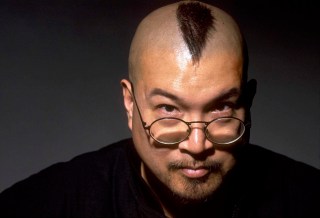
Fred Ho wants a music that speaks, and he wants to speak through music: “The music,” he writes, meaning for the most part jazz-derived improvisation, “has to and will embody messages, either explicitly (in the form of lyrics and/or song titles) or implicitly (in the sound and in its spirit).” To start out, I think, there are at least two things to note in such claims, of which Ho makes many. The foremost is almost unremarkable for its transparency, as it’s probably intended to be: Ho writes and speaks about improvised music as much as he composes and performs. The series of manifestoes, polemics and mandates that he has delivered, in essays and addresses over the last two decades, are instances of musical embodiment, not just statements about what he thinks his music does, but language forms representing the state to which his own music aspires: it wants to say what it means, directly and transparently, to its audience, “the people.” Second is a stylistic and grammatical point, really, a feature of his characteristic language that tends to be read back, by listeners of various persuasions, onto his music, often as stridency or brashness: Ho’s language, if we mean to treat it as in any way poetically shaped, is inevitably cast in an imperative mood. My question today, which I want more to pose than pretend definitively to answer, is how concretely music works toward what we might take for meaning. I want to take Fred Ho at his word. Can a baritone saxophone solo, for example, of the sort you’re hearing now, be said to speak? [Fred Ho’s arrangement of “Naima” was playing in the background, as I presented.] How does music aspire, beyond obvious programmatics, to the condition of speech? What exactly is being declared?
         Jazz journalist Bill Shoemaker has written, perceptively and with a somewhat troubling accuracy, that
There are many musicians through­out jazz history who have been labeled revolutionaries, but that’s usually because of their musical accomplishments. Fred is a revolutionary who uses jazz as his medium.
The presumption, coming out of Ho’s work as much as Shoemaker’s well-attuned audition, is that sound can carry political and social meaning directly, formally; that revolution isn’t a trope but an aesthetic practice, enacted both for and with audiences. Ho describes the reaction he wants from listeners as akin to those of a child, who can “be both spellbound and revolutionized” by a given performance; music at once enthralls and enables, two countervaling states of raised consciousness – piety and critique, mimetic wonder and diegetic detachment, in a sense – that inhere in his populist claims. To play for the people, if you think about it, is both to invite mimicry and to call for unruliness, to refuse that same invitation. How, if music means to speak, can “people” be empowered by the cultish image of the inspired soloist, by his polemic force, exactly to speak out, not to be silenced by the verbal or expressive force of that declaration?
         There’s a deeply embedded formal contradiction here that speaks to the nature of a musical politics, and to the ways in which music operates, I think, as a cultural pedagogy, as instruction in democratic or revolutionary forms of critique. In a talk at the triennial conference of ACLALS on 19 August 2007, Henry Giroux spoke with some dismay about what he called “the politics of disposability” among American young people, calling for a renewed and hopeful cultural pedagogy, following Paolo Freire, a radical futurity that dignifies people “so that they can become fully free.” This is Fred Ho’s vocabulary. Not only is it necessary to foster critical engagement among students with the cultural materials in which they find themselves immersed, teaching how to “read critically,” but there is a pressing need, Giroux argues, “to prepare students to function as critical agents capable of understanding, engaging, and transforming those discourses and institutional contexts that closed down democratic public life” (119). They need to take part. Despite his deep suspicions of aesthetics, which he suggests is tainted by “the residue of nostalgia and elitism” and also “seems particularly out of date, if not irrelevant” given the pervasiveness of a largely debased popular culture (are there echoes of Adorno here?), Giroux insisted on moving beyond critical thinking toward enabling students as “cultural producers,” as makers, as co-participants. But what do such arts sound like? Should we still be cautious of aesthetics, given the barometers of taste and technique that tend to manifest in such contexts? How do we face up to the demands of a democratic or popular art, of its audience? We’re negotiating a tension over the declamatory and the formal here: the expressive and the well-made. Addressing the rigour of our engagement depends, if you think about it, on a set of standards against which the openness of that participatory dynamic mitigates.
         Fred Ho’s music operates, I think, on versions of this tension, negotiating the uncertainties and challenges between naïve, expressive directness and aesthetic detachment. As a composer and improviser, Ho has pursued remarkable and effective fusions of Asian heritage and folk forms with African-American avant-garde jazz, and many of his ballets, operas and suites – as extended idioms adapted from their “legit” Eurocentric counterparts and re-imaged as culturally porous, collaborative events – have been realized in complex, poly-dimensional, multi-media productions. These structural and conceptual pluralities have become hallmarks of Ho’s creative enmeshment in the unsettled and unsettling irresolutions of his diasporic cultural status, as an Asian-Pacific American. Difference and contrariety are, in Ho’s work, not problems to be resolved but constitutive elements through which liberation, both as a raising of consciousness and as tangible political transformation, might be sought. At the same time, Ho openly acknowledges his debt to the social polemics of Black Nationalism of the 1960s. His work as a writer (represented, for example, in his contributions to the anthology Legacy to Liberation, 2000) remains seemingly bound up in identity-politics and Marxist apologetics, an often fiercely uncompromising discourse that appears, as I’ve noted already, stylistically and theoretically at odds with his radically destabilizing musical practices. At the same time, if you’ve been able at all to listen to the baritone solo and now to his arrangementof John Coltrane’s “Naima” playing in the background, you realize that his music, on the surface, is not premised on inaccessibility or difficulty, consistently, but repeatedly seeks out – through riffs, repetitions, allusions to popular idioms – to involve listeners in its unfolding. The baritone solo, while offered up as an extension of the lineage of Sonny Rollins, Anthony Braxton and Roscoe Mitchell, doesn’t aspire to Gunther Schuller’s musicological complexities or to radical serialism. Similarly, Ho’s admiration for poets such as Amiri Baraka or Kalamu ya Salaam appears to have much more to do with the verbal directness of their political interventions, with their emphasis on declarative immediacy, than with their linguistic or formal innovations. The title of the suite from which this music is taken bespeaks the politics of verbal directness and transparent engagement that Ho craves: “Yes Means Yes, No Means No, Whatever She Wears, Wherever She Goes.” Meaning, while at issue, wants to be denuded equivalence, unmarred by subtleties or doodads. The lyrics by Ann T. Greene, Andrea Lockett and others for the suite, a pro-feminist anti-patriarchal work commissioned in 1993 by WHAM! (Women’s Health Action and Mobilization) and BWARE (Brooklyn Women’s Anti-Rape Exchange), pull no punches. While resolutely opposed to sexual violence, the work, for Ho, has its roots in reactive physical confrontation: “My mother is a survivor of domestic violence, and as a young teenager, I physically fought my father to stop him beating her. I now see this as my first
revolutionary insurrection and challenge of patriarchal authority.”
Still, when Ho asks, in a recent artist’s statement, “how does music free us?” he draws attention to sonic texture and to poetic structure as inherently, crucially political, focusing our ears on how that challenge occurs, physiologically and consciously, rather than simply what it might be about. Ho’s apparently naïve preference for uninterrogated declamation – what some critics have dismissed as crude stridency – actually involves him, along with his listeners, in a difficult dialectic, a deeply rooted tension over the nature and practice of expression itself: of the interconnections between doing and saying. Paul Gilroy’s discussion of jazz and diaspora in Against Race – where he argues for “new possibilities and new pleasures” enabled by the fundamental dislocations of diasporic non-identities – provides a starting point for re-thinking Ho’s indebtedness to racial nationalisms, and for a more careful and attentive reading of his mesh of sounds and words. Coming to Gilroy might seem problematic in this context, given Ho’s overt attachment to what Gilroy dismisses as raciology, but Ho’s frequently discussed but still largely uninterrogated adherence to black nationalism – particularly as a non African American – finds one of its moments of coherence in the context of diaspora. How can a Chinese-American seriously compose a Black Panther suite, for example? There’s no reason why he shouldn’t of course, but the racial politics explicit in this work certainly trouble that allegiance, although trouble is exactly, I think, what Fred Ho might be about.
Working to define “the distinctiveness of diaspora poetics” (335), Gilroy cites Leroi Jones / Amiri Baraka’s (1967) poetic formulation of “the changing same”:
This changing same is not some invariant essence that gets enclosed subsequently in a shape-shifting exterior with which it is casually associated. It is not the sign of an unbroken, integral inside protected by a camouflaged husk. The phrase names the problem of diaspora politics and diasporic poetics. . . . Invariably promiscuous, diaspora and the politics of commemoration it specifies, challenge us to apprehend mutable, itinerant forms that can redefine the idea of culture through a reconciliation with movement and dynamic variation.  (“Diaspora and the Detours of Identity” 336; Against Race 129-130)
James Clifford, among many others, criticizes this formulation inasmuch as it tends to abstract and to diffuse collective political and social agencies, the possibility of there even being a “people”:
diaspora discourses such as Gilroy’s refuse to let go of a “changing same,” something endlessly hybridized and in process but persistently there-memories and practices of collective identity maintained over long stretches of time. Gilroy attempts to conceive the continuity of a “people” without recourse to land, race, or kinship as primary “grounds” of continuity. What, then, is the persistent object of his history? How to circumscribe this “changing same?” (Clifford 320)
This is a serious issue for a version of what I’ve heard here start to be called social aesthetics, I think: how effective to locate and to speak to a popular audience.
         Ho’s recording of John Coltrane’s “Naima” (1998) – with lyrics by poet and journalist Andrea M. Lockett – offers listeners an opportunity to address Ho’s deliberately conflicted relationship to the radical sixties, and also suggests how a dynamic critical relationship between Ho’s work and his multiple cultural and musical heritages – what he names a practice of radical respect – has the potential to enact a model for new and liberated human communities, an arduous and challenging idealism he calls, following Sun Ra, embracing the impossible.

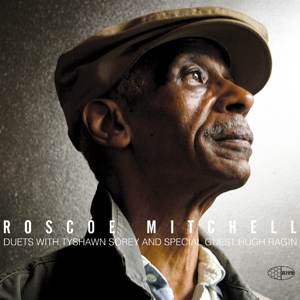
Time Pressures: Short Take on Roscoe Mitchell with Tyshawn Sorey and Hugh Ragin

Roscoe Mitchell’s new, eponymous album on Wide Hive records presents him, as composer and as improviser, in shifting configurations: in a trio with himself on saxophones (alternately sopranino, alto and bass), Hugh Ragin on trumpet and Tyshawn Sorey at the drum kit; in duo (on flute and alto sax) with Sorey, who switches to piano for two of the three tracks; and solo with a set of percussion miniatures, played on what in his work with The Art Ensemble of Chicago used to be called “little instruments,” which would include everything from small tuned gongs to found objects. The album is sequenced as an extended palindrome, solo-duo-trio-[solo-trio-duo-trio-solo]-duo-trio-solo, creating an interlace of varying sound-textures while also suggesting recurrence, a cyclical symmetry.
Mitchell’s solos all involve delicately a-metrical plunks and tintinnabulations; he has recorded similar percussion pieces on previous solo projects, but here they feel artfully succinct and carefully realized. Striking his tabletop array of wooden blocks and metallophones with compact sticks and mallets, he produces fleeting, irregularly cadenced clusters of pulses and beats. Time takes on a certain plasticity in these brief performances, as Mitchell alternatively presses toward and draws back from an implied downbeat, a centred measure that never quite arrives. Time hangs between counted and uncountable, openings and distensions, small extemporaneities, spaces. His saxophone tone is always fully-blown, reedy and firm, but his pitch – like his rhythmic sense – often seems to skirt around its centres, as he deliberately manipulates micro-pressures of breath and embouchure to stretch and pull the notes just slightly sharp or flat, creating subtly thrumming layers of detuned harmonics. This plasticity is a hallmark of Roscoe Mitchell’s sound, as I hear it, his improvised lines pushing and tugging at their audible edges.
Tyshawn Sorey’s drumming develops a similar kind of temporal openness, and his sense of auditory space recalls for me some of the work of Paul Motian and Jerome Cooper, and – perhaps echoing a little of Roscoe Mitchell’s early Old/Quartet sessionsPhillip Wilson. I love his playing here, working a middle zone between pulse and arrhythmia. His piano is also compelling; his touch can be hard, but Sorey uses what could potentially be taken for an underdeveloped pianism to great advantage, treating the piano the way maybe it should be treated, as percussion. On “A Game of Catch,” he starts by thrumming and plucking inside the instrument, working the interstices of Mitchell’s melodic fragments. But I especially like his playing on “The Way Home,” where he develops waves and surges, dispersions and clusters, that feel reminiscent to me of Sam Rivers’s piano forays with his trios and with Dave Holland. Sorey’s playing evinces a compellingly nascent rhythmatizing – texturally, a marked contrast from his Morton Feldman-influenced “Permutations for Solo Piano” on his 2007 release That/Not (although, as sound conceptualists, both Sorey and Mitchell are not that far removed from Feldman’s interest in resonance and refrain, what a recent article in The Guardian called “the substance of sound”). And Hugh Ragin is excellent throughout the record, drawing on sonic vocabularies developed in his Sound Pictures for Solo Trumpet(Hopscotch, 2002, a CD that featured his own compositions as well as a suite by Wadada Leo Smith). A master of free improvisation, Ragin evokes at times in his tone and attack the clarion spectre of Louis Armstrong, at others the more laser-like inflections of Lee Morgan: his playing is that fine, that good. I could listen to him all night and day.
Centripetally and centrifugally, convergent and divergent, the music of Mitchell, Sorey and Ragin explores the elastic and uneasy verges of time present, wanting to make its ragged limits sing.

Short Take on Nicole Mitchell, Solo

I spent the day yesterday off and on with Nicole Mitchell‘s remarkable new cd on my player. Engraved in the Wind, released on the French Rogueart label, is a set of compositions and improvisations for solo flute (with a track or two overdubbed, but most cuts using a single live instrument). Nicole Mitchell has worked in a number of musical contexts, from collaborative ensembles and AACM repertory groups to her own Black Earth Ensembles, but here she is in many ways at her most vulnerable — and also, her most moving. This album doesn’t merely showcase her virtuosity, which is thoroughly impressive; she is hands down and unquestionably one of the most accomplished and brilliant flautists in the world, working now in any idiom or sub genre, from classical to jazz and beyond. Mitchell’s huge instrumental technique, whether focused on fundamentals or developing an extended sonic palette, inevitably serves the musical demands of a given moment. The disc intermingles commissions from colleagues (and one piece from the emerging contemporary repertoire for solo flute, Alvin Singleton‘s “Agoru III”) with a series of improvisational explorations of various elements in Mitchell’s instrumental language, a concept akin to Anthony Braxton‘s For Alto, although Mitchell’s rhythmic and harmonic senses are entirely her own; her playing sounds little to nothing like Braxton’s, and she prefers (to my ears, at least) a more folk-based and lyrical melodic tactic. There is a debt here, perhaps, to James Newton‘s Axum, and Newton is one of the composers to offer an original composition, in this instance “Six Wings,” for Mitchell’s recital. But while she often acknowledges her indebtedness to traditions of Afrological music-making — “Great Black Music, Ancient to the Future” — her voice, at this point in her career, has become fully her own. (Joe Morris provides excellent liner notes that speak to her technique and to her musical approaches much more eloquently than I can here.)  On the album, she explores a wide range of textures and timbres, but my favourite cut so far is “Dadwee,” a folksy (even blues-ish) line co-composed with Aaya Samaa that demonstrates the almost buttery richness and harmonic density of her flute tone. Her music nourishes as it unfolds. The recording, done at UC Irvine, is intimate and full, very present, which helps, of course. But what most impresses me, as I listen, is the warmth and closeness of her music. Nicole Mitchell has created a definitive album of solo flute music, one to which I am sure I will return again and again. 

Evan Parker Live at the Western Front

It was a privilege to hear Evan Parker play last night, Friday March 22nd, at The Western Front. The concert was a return to a venue that has become a Vancouver landmark for the avant garde, presenting cutting-edge music, dance, film and visual art for 40 years. It also marked the release of Vaincu.Va!, an LP version of a recording from The Western Front’s archives of Evan Parker’s first solo concert there on November 8, 1978, which was the last performance in his North American tour that year,  a tour that Alexander Varty credits as “the first of its kind to be undertaken by a European improviser, paving the way for an invasion of exciting new music.”  In the unfolding of this music, its trans-Atlantic dissemination, last night’s concert was a significant moment, reinvigorating an important improvisational archive, making a history happen. Again.
Evan Parker played two sets, each under three-quarters of an hour: one, an extended solo improvisation on soprano saxophone (echoing the 1978 concert), and the other in an improvising trio with Gordon Grdinaon electric guitar and oud and Kenton Loewen on the drumkit. The Front’s recently refurbished Grand Luxe hall, upstairs, was packed to capacity; there must have been close to 150 people in the palpably supportive and expectant audience, a mixture of neophyte listeners for whom this would be a first experience with Parker’s music live and others who had been following Parker’s music for decades, some of whom I even overheard saying that they had attended the first concert there 35 years ago. I felt a very real sense of a listening community, not only because I was able to reconnect with friends I’d first encountered years ago at events like this, a fairly dedicated long-standing following for improvised music in Vancouver, but also because, before the concert and at the set-break, people seemed genuinely keen to talk with each other, not just about the music they were hearing, but about themselves; it seemed to me that, whatever the aesthetic gifts and challenges that this particular music offered us, it also occasioned a sense of bonding, a coming together, however briefly, of good shared human energy.
The solo soprano set was a single continuous piece that was sui generis for Parker. “Well,” I think I heard him say quietly before he began, “here we go.” Hearing his solo soprano music feels to me like stepping into a thick stream of layered arpeggios, intersecting torrents of 32ndnotes and harmonics that Parker sustains without pause through circular breathing for half an hour or so, at which point he stops; when he plays he doesn’t produce a finished work so much as enter into an ongoing process, a rivulet of shared aural time. The rapid shifting among at least three registers on his horn produce a kind of counterpoint not unlike the compositional practices of Steve Reich (who, like Parker, acknowledges John Coltrane as an early influence), but where Reich’s music seems marked (and this is not a criticism, but an observation) by sculptural calculation, Parker’s polylinear music seems to me not so much an effect of abandon or looseness, but more accommodating than Reich’s to the unpredictabilities and small excesses, the momentary remainders and overflows, of body and breath. I could hear, I could fell the fleeting intensities of those cascading lines resonate and pulse in my ear canals. Resonance: that’s exactly the right term, I think, for what Parker’s solo music seeks, and moment by moment what it finds. He stopped playing as unceremoniously as he had begun, just taking the horn out of his mouth (as Miles Davis had told Coltrane to do back in the heyday), and was met with huge applause for that small room. I have never attended an Evan Parker performance that was less than great, but this short improvisation felt tremendous. He returned to the centre of the stand for what seemed like an encore, but instead of more, he played a 20-second head of a Thelonious Monk tune – I’m not sure what it was, maybe “Ugly Beauty,” though I’m sure that’s wrong – during which his tone shifted markedly, more rounded and plainspoken; he was hearkening back, if only for only a passing instant, to Steve Lacy. At the set break, James Coverdale (I was sitting beside him and Lynn Buhler) said he thought of Lacy too, and that it was something like an invocation to Lacy’s spirit, Lacy who has played the same room so many times, solo and in duo with Irene Aebi and others, in the past. Again, he had sounded an improvisational historicity, in the present, in our presence.
At the beginning of the break D. B. Boyko, the Western Front’s artistic director, presented Parker and artist Eric Metcalfe with copies of the LP, which they autographed for each other. (Metcalfe’s artwork adorns the album cover. He mentioned that he was one of those present who had attended the original concert.)
The second set consisted of two improvised pieces by the trio. For the first, Grdina on hollow-bodied electric guitar sometimes traded flexible lines with Parker, now on tenor saxophone, and sometimes provided resonant string texture; his tone, I thought, was sometimes reminiscent of Joe Morris, although his melodic and harmonic conception was certainly all his own. Kenton Lowen’s percussion – speaking of echoes and allusions – recalled for me the multi-directional playing of Sunny Murray (as on his sixties recordings with Cecil Taylor or Albert Ayler). Loewen started the second piece with sparse bowed metals (although I was back in the audience and couldn’t actually see what he was doing with his hands). Grdina switched to oud, and the idiomatic character of the instrument seemed to affect the playing; Parker offered what I think were largely Phrygian lines, a sort of Spanish-Moroccan tinge: lovely, moving, instantaneous world-music. There was no encore.

lovellevellilloqui: Short Take on Thomas Chapin

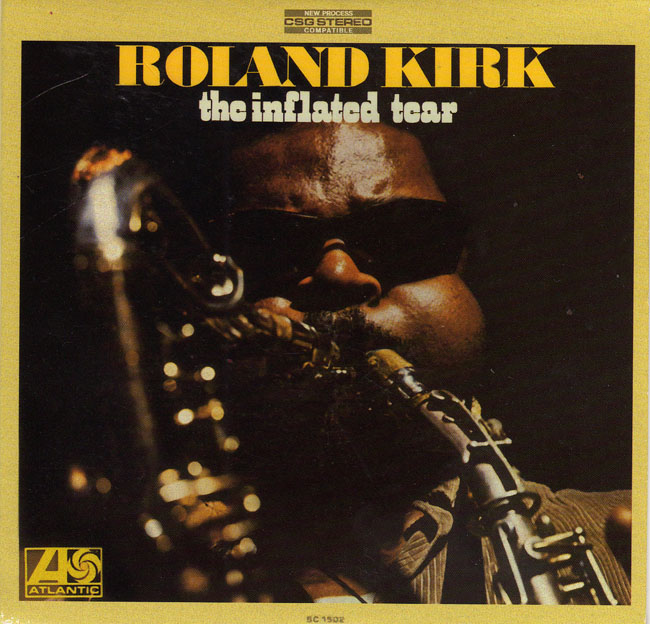
Yesterday I received in the mail a copy of Never Let Me Go, a three-disc compilation of two performances by Thomas Chapin‘s nascent quartet (with Peter Madsen on piano, Kiyoto Fujiwara [’95] or Scott Colley [’96] on bass, and Reggie Nicholson [’95] or Matt Wilson [’96] on drums), a recording of some of Chapin’s last concert appearances before his illness the following year and his death in 1998. The recordings are good, and seemed to have been clarified and cleaned up a little; the first two discs, sets from Flushing Town Hall in NYC in November 1995, are reminiscent acoustically of a high-end bootleg: the music is present and immediate, but there are still a few recalcitrant rough edges. The piano, for instance, sounds a bit rubbery, like a poorly tuned upright. Not that I’m complaining: I think the sound suits the vital exuberance of the playing all round, its ardent velocities. (In fact, on the better recorded Knitting Factory gig, the upper register of the club piano is also pretty detuned, but Madsen makes a virtue of necessity, on “Whirlygig” for example, producing metallic percussive textures as if this were a “prepared” instrument.) This quartet as I understand it was a new and evolving formation for Chapin; principal reference points for this music include post-Coltrane hard bop — Madsen’s left hand plumbs the lower registers and jabs at chord substitutions much like late-60s McCoy Tyner, and also Jaki Byatd — but the group also takes up Chapin originals, some penned for his long-standing trio. (I really like their version of his “Sky Piece,” with a terrific solo intro by Colley.) Chapin’s alto seems at times to find its lineage from Charlie Parker sieving through Eric Dolphy, maybe with a touch of Lou Donaldson, but his most obvious influence here, if influence is the right word, is Rahsaan Roland Kirk. Like Rahsaan, Chapin is a virtuoso of excess: he never has anything short of too much to say, too many more notes to play. His improvisations are flush with as much music as he manage, and his saxophone tone is reedy, robust and fully blown. He enacts extemporaneously, in track after track, what Giorgio Agamben variously calls resto, excess, remainder, outside, the open–a kinetic space of vital negotiation between animal Eros and creative will, aisthesis and aesthetics, feeling and making, body and soul. In a word, his sound strives to express. The quartet’s version of Rahsaan’s “lovellevellilloqui ” (originally from The Inflated Tear) both re-enacts and bears witness to, as a now-posthumous recording, what made and makes Thomas Chapin’s music so important to hear: its virtuosity of abundance, its intensely sounded love.

Voicings

Jayne Cortez passed away—went flying home—on December 28, 2012, so this small tribute comes a month or two late, but I did want to record publically my sincere admiration for and indebtedness to her poetry and her performances. There was a proper obit in The New York Times, and there have been many warm tributes, including one from critic Howard Mandel.

Karl Coulthard introducing Jayne Cortez
at the University of Guelph, September 2011
I met Jayne Cortez only once, and only recently, when she gave a keynote talk about her own work at the 2011 Guelph International Jazz Festival. She presented selected recordings she had made over the past 30 years with her band The Firespitters (whose revolving personnel often included her son, percussionist Denardo Coleman, as well as members of Ornette Coleman’s electric ensembles), and her comments focused on elaborating the chiasmic chant from the title piece of her recent Best of CD: “Find your own voice, and use it. / Use your own voice, and find it.” This sounds like advice for new performers – and it is certainly that – but the aspirational panacea of self-discovery these crossed lines offer is only part of their intention.
I have to admit that I am well trained to be suspicious of the expressive, and for better or for worse I incline toward an arch poetic technique that finds its touchstone in Martin Heidegger’s maxim, Die Sprache spricht: language speaks itself. Wimsatt and Beardsley’s affective and intentional fallacies are difficult beasts for me to shake. It can be perilous for a non-African-American like me to associate the expressive with racially marked text, and to implicitly divide it off from canonical, oblique, academically-mediated and difficult Poetry with a capital P; black identity, down that slippery slope, gathers in the emotive and the embodied, while technical linguistic prowess remains the provenance of a white cultural dominant – a racial bifurcation with which I’m not just uncomfortable but which also belies what most poetry, for me, wants to accomplish, to speak. I think George Lewis’s conceptof the Afrological – which he links principally to musical practices – is useful  to invoke here, in as much as it aims to foster dialogue (“Gittin’ to Know Y’All”) without necessarily enabling cultural or racial appropriation.
            My memory of Jayne Cortez isn’t so much her talk as of a conversation we had the next day, by chance. We were both staying at the same hotel in Guelph, and ended up riding in the same Red Car van to the Lester B. Pearson Airport in Toronto, to catch our flights home. The trip takes nearly an hour. Ms. Cortez remembered me being at her talk the previous day, and asked politely after my own poetry, which I’d read at the colloquium. We talked about emerging writers, and about her husband Melvin Edward’s sculptures, and I remember she praised William Parker’s generosity and musical vision. But most of all, what I recall is her tone and spirit; she talked with you, not to you. She, too, seemed generous and open; she smiled almost the whole time we talked. I admire her greatly that she would so happily and freely engage with somebody she’d just met and hardly knew. It was like she genuinely wanted to know about you and your inclinations, and to share hers. Respectful exchange, a crossing.
            One of my favourite pieces on her compilation CD is a duet with baritone saxophonist James Carter, an improvised blues (called “I Got the Blues,” recorded in 1994) involving, as her notes put it, “verbal call and response between the poet’s voice and the baritone saxophone sound.” Neither she nor Carter is hesitant or diffident; they know their voices. Cortez doesn’t offer any sort of phonemic sound-poetry, but sticks to the declarative, what she does best: an edgy, passionate, and fierce lyricism. Still, the piece is as much interchange as exchange; they listen and speak to – with – each other, and it is the alternately assertive and yielding textures of that conversation, as much as its content, that come to matter. Cortez says that writing a poem is a matter of getting your mouth on the paper, of expression finding its way over a page. But I think that the reverse might also be true: to find a way to sound out off the page, to make those marks speak—mouth to paper, paper to mouth. Jayne Cortez’s work, for me, offers a model of committed self-expression, a finding.