Flow, Fissure, Mesh

Home » 2013 (Page 5)

Yearly Archives: 2013

Keith Jarrett, Yard Sales and the Commodification of Genius, Part One

In the next handful of posts, I’m going to parcel out some revisions of a sixty-odd-page draft of what remains of a chapter for a book (once called Earmarked) that was never to be, maybe never meant to be. The chapter, which I called “Keith Jarrett, Yard Sales, and the Commodification of Genius” was occasioned by me finding (about ten years ago now, maybe longer) a fairly pristine LP copy of Keith Jarrett’s famous and well-circulated Köln Concert album at a yard sale in Vancouver, and also by a brief and really unremarkable exchange I had with the seller over the right price. The chapter was intended as a recuperation of a Marx-influenced formalist materialism, close to the sort practiced by Theodor Adorno about forty years earlier; as an implicit plea for the necessity, in our own time, of a kind of critical archaism, a deliberately out-of-step temporality; and as an interrogation of the figure of the postmodern genius, or of the virtuosity of the extemporaneous thinker. How does improvisation either resist or accede to becoming cultural capital? Is its cultural capital, in fact, inscribed or encoded into the work of resistance?
I’ll start with two quotations, to set the project up, the first from music critic John Corbett:
One of the things I like most about LPs is the way they absorb history. By that I don’t mean the history of the music, but also the history of each record as an object; records are repositories of music’s material culture. CDs seem less historically palpable than LPs. Collectible CDs? Maybe, but not for me.
And the other from Karl Marx, the eleventh of his theses on Feuerbach:
Die Philosophen haben die Welt nur verschieden interpretiert; es kommt darauf an, sie zu verändern. (Or, something like, “Philosophers have merely and variously interpreted the world; the point is to change it.”)
Despite my hopes at academic relevance, it seemed quaint to me then and its seems quaint now to begin with such a citation from the “Theses on Feuerbach,” particularly this one, the eleventh, which has been flogged like a dead horse at the crossroads of interpretation and action, of what thinkers do and what they think they ought to. To me, now, it sounds more like an excuse than an imperative, a means of translating the feint of engagement in critical and academic writing into something that really matters, that changes the world. Marxism now, however various and unruly it might be, however impossible to frame as a coherent movement, has also come to appear dated at best: notions of socialism and social reform, class consciousness, commodification and exchange, property and value, have shifted so drastically in the last century, many to the point of conceptual dissolution, especially in the rather privileged Western European sphere. With multifarious levels of access to and exclusion from investment (everything from bank accounts to mutual funds), the blurring of ethnic and national identities, the suffusion of global capital into uncertain and contingent oligarchies like multinational corporations and free-trade alliances, the diffusion of a complex body of worldly information through the mass media, the idea of an economically determinate class, for example, seems historically remote, out-of-date. All this seeming is no doubt at least in part a function of my own economic and cultural privilege; I have the luxury and the leisure to release myself from the imperatives of social transformation, a comfort zone established by my rarefied – if still tenuous – position within many networks of value. Certainly there are haves and have-nots, the well-to-do and the poverty-stricken, but the boundaries and divisions are no longer so easy to determine, if indeed they ever were. Participation in the mechanisms of consumption and exchange is neither uniform nor closed, and the forms of consciousness and solidarity on which Marx might have depended for the renovation of labour and worth have become permeable, plural and radically indeterminate. It is truly difficult, for instance, to ascertain who exactly might constitute a proletarian body. Most late and post Marxisms, from Adorno on, have winnowed away the categories of Marxist analysis (from class to ideology) to the point that they can no longer find much of a purchase in the contemporary economic and political morass. It would be fatuous to dismiss Marxism as irrelevant; indeed, given the transformation of an orthodoxy of political economy into what Michel Foucault once characterized as “divergences” in a foundational “discursivity” (Rabinow 114-5), I should note instead how Marxism has come to designate a limited but prolific body of intersections, a master canon continuously inflected and re-written by an array of theoretical and critical modes:
Annales school historians, Frankfurt School theorists, Poststructuralists, Reader Reception Theorists, New Historicists and Cultural Materialists have reformulated Marxist principles and extended them by drawing more and more widely on other ideas from other texts — texts of philosophy, ethnology, anthropology, linguistics, psychoanalysis and religion. They have produced a variety of transformations, inversions, displacements and reformulations, resolving some of the impasses they inherited and reinscribing others. And they have made Marxism perhaps the most imperialistic discursive formation today. (Bannet 2)
I think I tend, however, to lose sight, in the wake of this permanently self-revolutionizing theory, of what might still be said to constitute the core of a Marxist critical praxis. (Bannet appears unwilling to grant the positional solidarity of a proper name to her “Marxism,” given its decentred plurality.) Returning to canon, to the classic statements of value and revolution we might associate with Marx himself, doesn’t prove particularly satisfying, either. The demand that workers of the world unite, for example, would serve as well for a slogan for Benneton advertising as it might for union bureaucracies, and clearly re-inscribe a deeply problematic collective determinism that is deeply endemic to the hegemonic forms of western politics. (What workers do we mean? What constitutes work? How is a proletariat demarcated? What world do we mean — first, second, third or fourth? Unite on whose terms? How?) It is difficult still to hear a deeply felt call for socialist revolution. Manifestoes date themselves, locked into their own inevitable anachrony.
The flipside of such anachrony, its camera obscura inversion, has to be nostalgia. I remember when I was fourteen, or fifteen at the most, I bought from our local bookstore a blue-spined Pelican paperback version of The Communist Manifesto. It’s short, a quick enough read, but it is also so historically and materially specific in its frames of reference, with its welter of dated prefaces and that its smallish scholarly apparatus (by none other than A. J. P. Taylor), that I had a hard time feeling anything of the insistent presentism of its famous opening: “A spectre is haunting Europe . . . .” but a spectre that felt, at least as an adolescent reading experience, more archaic than disturbing. I wasn’t a particularly careful reader, sure, but I seemed to know that the book, that this particular book, could have very real transformative power as a material object. I could use that manifest spectre, I mean, to scare my parents. Which is exactly what I think I did. I remember announcing to them from the back seat of the family car, book in hand, that I had become “a communist.” I hadn’t joined any political organizations, of course, and I don’t think I even knew anyone who was especially political. I think my parents took my declaration fairly calmly, assuming I had next to no idea what I meant, which wasn’t exactly true. I knew some things. I think, looking back, that this announcement offered me a point of Oedipal differentiation, a small shock I could leverage into separating myself from the everyday security of a safe middle-class paternalism. I’m not sure why I wanted to do this; privilege will feed and clothe you. Maybe I liked the idea of risk, without any experience of it. This moment, when saying “communism” offered me the literary pretense of action, a very small-scale moment of teenaged shock-and-awe, was also the moment when politics – at its very outset, even – deteriorated almost instantly into mere style.
In Why Marx Was Right (2011), Terry Eagleton reacts to this political anesthesia, symptomatic of late-stage capitalism, by arguing for – or at least asserting, declaring – the necessity of Marxist thought in a seemingly post-Marxist world, a world that appears to have left Marx behind. Marx’s “archaic” quality, Eagleton asserts (making a point about a return to “Victorian levels of inequality”), “is what makes him still relevant today,” that Marx still offers a means to regard capitalism, critically, from a contingent but critically-viable outside (Eagleton 3). “In these dire conditions,” Eagleton writes, citing Fredric Jameson, “‘Marxism must necessarily become true again’” (8). Marx is right for our own time, for Eagleton, because of his vatic prescience, because – against the odds, perhaps – in Adorno’s formulation, he threatens to be right, because we don’t want him to be. Eagleton suggests that Marx foresees the contemporary consequences of globalization, for example, and also offers a still-viable conceptual path for the critique of the massive commodification of experience. I think Eagleton is following Friedrich Engels, in a famously deferential note in the last chapter of Engels’s late book on Ludwig Feuerbach:
Here I may be permitted to make a personal explanation. Lately repeated reference has been made to my share in this theory, and so I can hardly avoid saying a few words here to settle this point. I cannot deny that both before and during my 40 years’ collaboration with Marx I had a certain independent share in laying the foundation of the theory, and more particularly in its elaboration. But the greater part of its leading basic principles, especially in the realm of economics and history, and, above all, their final trenchant formulation, belong to Marx. What I contributed — at any rate with the exception of my work in a few special fields — Marx could very well have done without me. What Marx accomplished I would not have achieved. Marx stood higher, saw further, and took a wider and quicker view than all the rest of us. Marx was a genius; we others were at best talented. Without him the theory would not be by far what it is today. I[t] therefore rightly bears his name. [Italics mine.]
Praising the genius of Marx, for Engels, is obviously a way of acknowledging both his intellectual brilliance and his visionary acuity. The Latin etymology of the term genius – a transliteration of the Roman name for something like a guardian angel or “tutelar spirit” – is linked (my old companion W. W. Skeat suggests) to the idea of the genus, genetic kinship, creative or generative origin, maybe even to push things a bit, something like a muse, an instructive spirit. Marx’s genius, along these lines, makes him into a corrective spectre who haunts our world, and who persistently speaks against the oppressive tendencies of our times, a counter-episteme. Eagleton explicitly states that this Marx isn’t the one he wants to recover, the Marx of “moral and cultural critique” who seems to him next to impossible to dismiss as foundational to most critical projects in the humanities. And maybe this means leaving Eagleton behind now in my current trajectory; but it’s important to acknowledge how even Eagleton’s doggedly practical and political recuperation of Marx depends upon and is haunted by that genius.
         The political and the cultural, that is, are difficult to disentangle, which seems like a banal enough claim to make, hardly a claim at all, except that the question of how that interdependency articulates itself, particularly across the domain of the aesthetic, becomes both crucial and vexed – bewitched, Adorno might say. Aesthetic abstraction, the rarefication of artistic material and experience, takes on the quaintly archaic appearance of privilege and withdrawal, but that rarefication can also be understood as an at least contingently foundational moment for political engagement, the fraught origin of what Fredric Jameson calls, potentially, “a radical intervention in the here-and-now and the promise of resistance to its blind fatalities” (The Cultural Turn35). I hear Adorno’s negative dialectics all over Jameson’s argument:
In the old days, abstraction was surely one of the strategic ways in which phenomena, particularly historical phenomena, could be estranged and defamiliarized; when one is immersed in the immediate – the year-by-year experience of cultural and informational messages, of successive events, of urgent priorities – the abrupt distance afforded by an abstract concept, a more global characterization of the secret affinities between those apparently autonomous and unrelated domains, and of the rhythms and hidden sequences of things we normally remember in isolation and one by one, is a unique resource, particularly since the history of the preceding few years is always what is least accessible to us. (35)
Jameson is talking about theorizing the postmodern, but – and I don’t think I’m out of synch here – he is also outlining a poetics here, at least implicitly, and even – in his gesture at rhythm – a musical aesthetic. And he’s talking, for that matter, about how Marx’s genius might materialize in contemporary language, how it might sound itself.
What’s emerging, I think, is an aesthetic of relevance, of creative urgency that matters. How is it, the question goes, that Marxism might remain, as Marxism, relevant if not contemporary, given its archaism, its ineluctable entanglements with “the old days”? Douglas Kellner argues, following both Adorno and Herbert Marcuse, that Marxism is defined by its persistent field of crisis:
Marxism still has the theoretical and political resources to provide an account of contemporary history and strategies for radical social transformation. In a sense, Marxism is always in crisis as new events emerge that require revision and development of the theory. Marx himself and subsequent Marxists were always revising and reconstructing the theory to take account of historical developments and to fill in the deficiencies in the original theory. In this sense, “crises of Marxism” are not so much signs of the obsolescence of the Marxian theory as a typical situation for a social theory facing anomalies or events that challenge its theories. (16)

For Kellner, scientific or orthodox Marxism can only be misapplied and inappropriate, but critical Marxism remains relevant (especially Frankfurt school, especially Marcuse): “Because no competing economic theory or critique of capitalism has emerged to replace Marxism, it is still an indispensable part of radical social theory” (18). But what constitutes the core of a theory, the theory, which is wholly self-renovating? For me, it’s the collision of the archaic and the nostalgic – that is, in a sense of the ideological and the utopian – in textual-materialist engagements with the historical. Historicizing Marxism itself, which asserts its relevance as a theory of historical crisis and transformation, refigures its quaintness. Responding to critiques of Adorno’s Marxist anachrony, Jameson argues that “if you reproach Marxism with its temporal dimension, which allows it to consign solutions to philosophical problems to a future order of things, . . . a vision of postponement and lag, deferral and future reconciliation,” you are in effect assuming an a-temporal critical posture he associates with the postmodern:
it may be admitted that this future-oriented philosophy — which prophecies catastrophe and proclaims salvation — is scarcely consistent with that perpetual present which is daily life under postmodern or late capitalism. (Late Marxism 231)
The radical critique proffered by Marxism has remained, for Jameson, its “genuine historicity,” the insistence upon historical renovation — even to the point of facing its own immersion in the historical, its own perpetual theoretical anachronism — to which Kellner also holds.
      So, I want to use Marx as a point of departure for at least two reasons. First, my initial object of study, the yard sale, operates like a peculiar pocket of capital production and exchange both within and outside the complexes of regulation, distribution and control that constitute the wider market. Like Marxism itself, yard sales are inherently quaint. They are highly localized, interstitial formations at which nascent commodities, in the Marxian sense, are able to gestate, baldly exposed to view: yard sales offer an immediate display (an aesthetic) of capitalism in its infancy. Marxist critique, for a moment, applies. Second, the actual ideologeme that I want to isolate and interrogate – the production of “genius” – feeds back into the dialectic articulated by Marx’s eleventh thesis, tired as it may seem. How is it, I want to ask, that an acquired object – in this case, a particular record by Keith Jarrett – shifts from a thing interpreted (as valuable, as meaningful) to a political manifesto, an immediacy which no longer simply represents but enables participation in a kind of community of action, a shift, as Keith Jarrett might say, from the passivity of audience member to the activity of listener. An apparently trivial, everyday act – buying a used album in somebody’s garage – presents a potential moment to call radically into question the structures of consumption and determination that almost invisibly and nearly inaudibly govern and shape us.
         More to come. (Next, theorizing yard sales, then acquiring, and listening to, Keith Jarrett.)
Works Cited to This Point
Bannet, Eve. Postcultural Theory: Critical Theory After the Marxist
Paradigm. New York: Paragon House, 1993. Print.
Corbett, John. Extended Play: Sounding Off from John Cage
to Dr. Funkenstein. Durham: Duke UP, 1994. Print.
Eagleton, Terry. Why Marx Was Right. New Haven: Yale UP,
2011. Print.
Engels, Friedrich. Ludwig Feuerbach and the End of Classical German
Jameson, Fredric. Late Marxism: Adorno, or, The Persistence of the
         Dialectic. London: Verso, 1990. Print.
– – -. The Cultural Turn: Selected Writings on the Postmodern,
1983-1998. London: Verso, 1998. Print.
Rabinow, Paul, ed. The Foucault Reader. New York: Pantheon,
1984. Print.

Torn Daisies and Drift

Here are live recordings, from a concert this past Friday evening, of soprano Phoebe MacRae and pianist Rachel Iwaasa premiering two new art songs, each using text taken from my poem “First Person Shooter.” The first, “Drift,” is a setting by Vancouver composer Alex Mah. The second setting, “Torn Daisies,” is by Winnipeg composer David Betz. The premieres were part of the Songfire Festival’s “Playing with Fire” concert, showcasing new music emerging from this year’s collaborative Art Song Lab, part of the Vancouver International Song Institute. My sincere thanks to Ray Hsu, Alison D’Amato, Michael Park and Rena Sharon.

Ex Tempore

KevinM

A quick post ad hoc from my mobile to initiate things. One of the research streams from the Improvisation, Community and Social Practice research initiative is called “improvisation and pedagogy.” A symposium on music education was held at the University of Guelph a couple of weeks ago that affirms a general tendency in this research stream to focus on improvised music, particularly jazz, as a model for education, particularly around practice-based research. Other significant threads want to develop community, collective and even networked paradigms for learning and for knowledge-sharing around the kinds of work done by the AACM in Chicago beginning in the mid-1960s. (See George Lewis’s A Power Stronger Than Itself.) My own interests, particularly as a pedagogically-untrained academic, involve assessing and exploring the implications of using both musical and theatrical improvisational techniques in the classroom. What are the cultural politics and the ethics around importing such aesthetic practices into an educational setting? How can improvisation be theorized as a pedagogical practice? More to come.

VISI Art Song Lab 4, Sprechstimme

What came to mind watching and listening to the rehearsals, the workshops and then the performances of art-songs created this past week was a tensile interdependence of cantus and poesis. The poems, as song-text, were written first for the most part, although during the week some alterations and revisions happened, as words were adapted for and inclined toward the music. In some cases, the same poem developed into two distinct versions; in my own case, the words didn’t change, but one of the two composers working from it, David Betz, used an earlier draft (which I had sent him by e-mail, to let him see the progress I hoped I was making coming up with suitable text) as the basis for his composition, so a few words and phrases don’t appear in the finished poem. (For instance, the title of his art-song, “Torn Daisies,” uses an adjective I changed [to “shredded”] in the final copy.) But I am very happy to let these slippages stand, partly because they work in his setting, and partly because I think that such misprisions, whether deliberate or inadvertent, cut to the heart of collaborative interdependence: the words take hold in the music, but also have to be let go, partially and partly, by the poem from which they originate. In David’s case, his setting deliberately mines the original poem for phrases and word-clusters that he seems to have felt resonated with his own textural sound-palette, but he almost wholly disregards the narrative or even syntactical order of the poem itself (although he does end his song, for example, with the last line of the poem, so some structural imperatives could still be translated, for him). In this instance, the poem has to be released from its formal bands, as speech, to adapt to the melodic contours of song.
This tug between cantus and poesis, between song and speech, can be read as a species of translation, but it can also be set apart from translation in its mundane sense, as derivative or secondary language, if by working between media we want to pursue a more primordial pathos. In À cor et à cri (Hue and Cry, 1988) the poet, ethnographer and surrealist Michel Leiris attempts, in a book-length collation of notes and lyric fragments, to map an alchemical genesis, a passage (cri-parole-chant) from visceral cry winnowed through words toward a condition of song: chanterfor Leiris means not merely to put words to music, not melopoeia, but also to materialize a perceptual intensity, gathered by and diffused through poetic language. He juxtaposes this heightened, conceptually genetic (that is to say, phenomenologically vital) modality to the servility of translation:
Peut-être est-ce quand les mots, au lieu d’être en position servile des traducteurs, deviennent générateurs d’idées qu’on passe de la parole au chant?
In practical terms – that is, in terms of the realization of an art-song and not merely its conceptualizing as an idealized poetic state of language – I think one element that might enact this tension performatively, audibly, is the technique of Sprechstimmeor song-speech (literally, speech-voice). In Alex Mah’s setting of the middle section of my poem “First Person Shooter,” which he titled “Drift” after an early version of the text, the vocal literalizes (as a kind of active reading, a lettering) this tension in phonemic stutter and repetition at the outset of the song (“st . . . st . . . stalled . . . stalled”), as if the grieving singer were unable to find her words, as if singing itself, as keening, were an act of verbal grief, stalling on itself. This stutter suggests both semantic shortfall – not having the words – and creative agon, a voice contesting its existential impediments to find an expressive diction. The words of the poem initiate and thematize this agon, but it can only fully realize itself in musical performance, becoming song rather than recitation. A little further along in the setting, Alex introduces Sprechstimme, and even produces a performative version of what Paul de Man named an “allegory of reading” or what J. Hillis Miller might call a “linguistic moment,” as the vocalist falls back into her speech register to utter the word “unspeakable.” It’s a dramatic effect, certainly, but also a semantic paradox, in as much as she says that she cannot say, as song diminishes or frays back into utterance, retreating from the agon in the initial stutter, rendering it all but pyrrhic: a version, or perhaps an inversion, of what Martin Heidegger meant when he claimed, in poetry, that “Die Sprache spricht.” In the performance last Friday evening, Phoebe MacRae did a tremendous job conveying not simply the feeling of grief over the events to which the poem responds – the Sandy Hook shootings – but also the essential pathos of the shortfall of language itself, of our inability to make sense of the senseless.
         I want to try to frame this tension, which I think operates at the core of art-song as a genre, by looking to the last lines of another poem written for use by the Art Song Lab, Leah Falk’s “Directions to My House”:
I am also a door, remember,
                           hinged to wind
                           swinging between
                           a list and lost
It’s a fine poem, which both investigates and resists the teleology of directions, of the map, to interrogate lyrically the concept of home-coming, of nostos. But our sense of home at the poem’s formal close has been unmoored, even rendered abyssal. The speaker-singer herself becomes a transitory and contingent site, permeable and unfinished. (Notice the absence, for instance, of closed punctuation – these sentences begin, but refuse to conclude.) The poem as descriptive list, as a catalogue of traits or a repository of images, hinges on a vowel shift – from the typographical (door-like?) rectangle of the i to the open oval of the o – between empirical certainty and placeless vacancy. Leah Falk’s spare melopoeia, a muted vowel-music, draws her words close to song, while also refusing the semantic surety of bel canto. Pathos emerges for me, as listener and as reader, in negotiating the fissure, the persistent and lyric gap between sound and meaning, not in wanting to try to suture it shut.

VISI Art Song Lab 3, Compose

Tuesday afternoon, Jocelyn Morlock offered an open workshop intended to address some of the possibilities of art song from a composer’s perspective. Instead of examining work by any of the current participants in the Art Song Lab, she presented some of her own work for audition and scrutiny, describing the challenges she faced in composing for text and also inviting us to re-think with her some of the formal and conceptual choices she made in her work. She opened with a reconsideration of “Somewhere Along the Line,” a song she created recently with Tom Cone during the last months of his life, when he was ailing with cancer. “He never heard it,” she told us. It was first performed by Rena Sharon and mezzo-soprano Melanie Adams on April 29, 2012; as a circumstantially posthumous work, it became, Jocelyn Morlock said, “the collaboration I never wanted to happen.” But the recording she played also helped her and helped us to start to think about the tensions and convergences at play in the making of an art song, the ways for her – she suggested at a number of junctures – that the music both interprets and, with as much care and respect as makes sense (particularly in this song) for the perceived intention behind the text, misinterprets the words. All interpretations are, to some extend, inevitably misprisions and misdirections, but Jocelyn Morlock was particularly concerned with trying to find connections between the musical and verbal lines in “Somewhere Along the Line.” Her setting creates a gently constrained pathos – it’s a beautiful piece. But what makes it even more interesting from a compositional point of view – to a non-musician like me – is the way in which it exploits aesthetically the shortfall in meaning that the poem itself thematizes; that is, the text suggests a trajectory into uncertain space, which she identified with Tom Cone’s sense of his approaching death: in the poem, he is, she suggested, “completely on unknown ground.” For me, this uncertainty offers a potential egress into the formal and conceptual fissures between sound and sense, music and word, fissures that open in the idea of line, both melodic and poetic. “I try, but can’t,” the poem reads – but in that truncated half-stich, suggests not failure but a valuing of what it is to try, of asymptotic convergence, of the approach of declarative and performative. Music emerges in and as a kind of contingent suturing, not as closed concord but as carefully collided difference, as mutuality. (See the end of this post for the recording of “Somewhere Along the Line,” shared from her SoundCloud page.)
She played us another of her collaborations with Tom Cone, a less pietistic number for solo voice called “My Orange Thong,” as well as her own setting of Goethe’s Second Wanderer’s Nightsong (via Franz Schubert):
Über allen Gipfeln
Ist Ruh,
In allen Wipfeln
Spürest du
Kaum einen Hauch;
Die Vögelein schweigen in Walde.
Warte nur, balde
Ruhest du auch.
Discussion about the composer as translator, as well as questions of deference and fidelity, came up around this piece. It seemed to me – although I’m not sure that everyone agreed – that what might be perceived as loveliness or even pathos in this lyric also leans, particularly in our own time, closer toward bathos and preciousness; how in or out of step is a Romantic impulse now? It’s a question worth asking, still, and worth addressing not just reflectively or critically, but also poetically, by translating. For me, who has only rudimentary and poor German, a word like “Vögelein” wants to be translated, deliberately, not as “little birds” but as “birdies” (or, someone suggested, “birdlets” – a bit like Chaucer’s “briddes” from The Parliament of Fowles:On every bough the briddes herde I singe, / With voys of aungel in hir armonye . . . ” [lines 190-1].) But such translation runs the risk of disrespect, and of puncturing the overly sweet lyricism (Chaucer says “ravishing sweetness”) of the text – a harmonious lyricism it appears many listeners still, 200-odd years later, expect and even demand of a poem. (While I’m on Chaucer, a few lines later in the poem, he describes a hybrid Ptolemaic-NeoPlatonic-Christian attunement of the spheres reproduced by that orchestra of birdies as a model for poetry, for art song:
Of instruments of strenges in acord
Herde I so pleye a ravisshing swetnesse,
That god, that maker is of al and lord,
Ne herde never better, as I gesse
But I also hear, no doubt anachronistically, a gentle prising open of high-blown seriousness in the playfully colloquial, mild irony [rather than stentorian certainty] of his last phrase, “as I guess” – not so much as discord, but as non-accord, as orchestrated difference. There was no reference to Chaucer, of course, in the discussion of Goethe and Schubert, but I’m digressing here to suggest the variously random and agnogenic resonances that emerged for me as I was listening and thinking about the respectful translation of text, from person to person, from setting to setting. I think that this playful uncertainty can offer a creatively energizing model – one path among many, perhaps – for translation, for collaborative intersections both within and among art-forms.) Her own resetting of the Goethe text, which she presented in a recording, was both lyrical and moving; but I also appreciated what I heard as Jocelyn Morlock’s willingness to embrace play in her music, not to undermine its aesthetic import but to sustain a non-exclusive openness that seems to me to be crucial to the collaborative work of art song in all of its styles and practices.
         Prodded by the session with Jocelyn, I took a stab at re-translating Goethe, with mild disrespect, I suppose, but also with an intention of opening up the text to other contextual and historical resonances, wanting to emphasize this brief lyric’s enmeshment in the allusive fabrics, the resonant polysemy, of our oversaturated and heavily mediatized brains; to me, the simplicity evoked not so much Chaucer (though “birdies” is still there) as Goethe’s near-contemporary, the rural wanderer John Clare, with his off-kilter homey syntax and his concision of diction around, of all things, the local Northamptonshire birds. So I tried a mash-up and re-mix as translation, a blurring of the particulate and the shared – still a little overcooked and thick, a little too adjective-heavy, I guess, I guess. But there you go. Thanks to Jocelyn Morlock for inspiration, and for an engaging and motivating workshop. (BTW, the word “exasperated” cut into the poem isn’t in Goethe, but it suggests breath and comes in this case from the annotations on Alex Mah’s score “Drift,” which was being rehearsed in the late morning before the workshop.)
The Vagrant John Clare’s Second Nightsong, Near Helpston, 1837  
Some kind of calm slouches
across these bald hillocks
Feeling stifles itself
in ruined choirs of trees
Exasperated birds
go mum, soon you will too
Soon enough you will too

VISI Art Song Lab 2, Practice

Betsy Warland conducted an excellent afternoon workshop on June 3 at the Canadian Music Centre focused on approaching art song from the vantage of a poet. She suggested moving beyond the poem as the genetic artifact for a song – as a source text that a composer then takes up and sets – and instead thinking more about the dynamic and nascent interrelationships between words and music, their interplay. Since the material coming out of the Art Song Lab is currently in development, participants are given a pretty much unprecedented opportunity to allow text and sound to intersect with and to reshape each other – a mutuality. Extending what Ray Hsu had said at our initial meeting the day before, Betsy Warland suggested that poet, composer, performer and even listener were engaged (both within and as a kind of network, I think) not merely in acts of interpretation but also in processes of mutual translation, a claim that for me gestures more fully toward the interplay of differences in the work, instead of encouraging a composer  to ferret out various hermeneutic cohesions between his or her composition and the poem and aspiring to make the musical and verbal likenesses. The emphasis on the creative potential of difference, tension and experimentation – trying out other things – really enlivened the collaborative aspects of compositional practice. Practice might be a resonant word here, in its temporally contrary senses both of praxis and of rehearsal.
         Betsy Warland also strongly suggested that we develop our art songs by focusing on emotional integrity, continuity and fidelity to experience – all of which will produce works that function as dramatic, communicative acts, as good songs. But I also hear a bit suspiciously in such very practical and excellent advice the ghosts of the kind of hermeneutic organicism I am  a little inclined to try to push through and to push aside in my own writing and thinking. She said she thought of art song as potentially negotiating a set of tensions (formal, conceptual, performative) in each song, on its own terms. Yes, exactly. So, the point might be not to discard the hermeneutic, but to tension it, to work at and through it.
         In the rehearsal sessions for the songs composed around my own poem, with soprano Phoebe MacRae and pianist Rachel Iwaasa, I found myself thoroughly impressed by the rhythmic sophistication both of the composers and of the performers. The poems on the page have very tight, specific syllabic rhythms (although the first section has been shifted out of an Emily Dickinson-ish small set of fourteeners and made into a brief prose-poem – though the folk-hymnal rhythms ought to still be ghostly there). Both  composers took up the words from different rhythmic angles; Alex Mah’s score seems fairly particulate, pulling at, and apart, individual words into their phonemic and syllabic components, working at the fragmentation of pulse at the level of the word, while David Betz has lifted phrases and segments from the poem, crossing over linear and spatial divisions (as I had arranged them, lineated them) to create what are still fragments, but which have more extension by enjambing – which has the effect of drawing out slightly longer cross rhythms from the language. I find I’m not especially attached to the poem as a verbal artefact, as something of mine anymore, or at all. I like the ways in which in these settings it takes itself apart, and reassembles as something else, someone else’s, but still linked to what I started with. Rachel also mentioned how she negotiated triplets and rhythmic clusters of fives and sevens, but overlaying them in her mind’s ear with words – a cluster of seven against four, for instance, can be felt by imagining saying the word “individuality.” Cool, I think. The abstraction of musical sound returns obliquely to the sematic loadings and rhythms of the colloquially verbal.

VISI Art Song Lab 1, Opening

This week I’m taking part – as one of six poets – in the Art Song Lab, which is hosted by the Vancouver International Song Institute, an intensive set of early summer programs in art song performance and in academic approaches to art song. Now in its seventh year, VISI is the creative brainchild of Rena Sharon, a professor of collaborative piano studies at the UBC School of Music and one of the very finest pianists in the country. For six successive Junes, I have given lectures on poetry for VISI, and will be giving another one (on W. H. Auden this time around) on June 21. But this week, I’m a participant rather than a faculty member. The six participant poets were asked to produce a draft of an original poem in January, which would be set to music by two different composers – two art songs emerging from the same initial text. The composers then bring their draft songs to rehearsals in Vancouver, for a week culminating in a concert – “Playing with Fire” – at the Orpheum Annex on Friday, June 7, when each of the twelve compositions will receive its world premiere, as part of the month-long Songfire Festival

         On the afternoon of Sunday, June 2, we had an informative opening session with the three co-directors of Art Song Lab: poet Ray Hsu, composer Michael Park, and pianist Alison D’Amato. They invited questions and discussion – most participants had just arrived in the city, and were still orienting themselves – and then offered to give something of a demo, workshopping a composition that Ray and Michael were preparing with Alison and soprano Lynne McMurtry for its premiere later this month. During the discussion, each of the co-directors spoke about the opportunities for collaboration that the Art Song Lab offers. Ray compared the creation of art song – and of poetry itself, for that matter – to translation, an analogy that gestured back toward Walter Benjamin’s “The Task of the Translator,” though Benjamin went unmentioned. (Ray gestured at Benjamin’s notion of an Ursprache or primal language, I thought, which all works of art translate; difference becomes primary to any form of writing, any work of art.) I thought Renée Sarojini Saklikar, one of the participant poets, made a provocative point about “performance as a site of research” for poetry.
         The brief, open rehearsal for Ray and Michael’s new art song was really informative, a pleasure to watch and to hear. The text for the piece involved a re-purposing of material from an interview with Lynne about art song performance, which she then sang back in a kind of lovely recursive loop; one of the lines referred to “having something to say and the confidence to say it,” which she did.
         This first session for the Art Song Lab was followed by a plenary discussion for the whole of VISI; there was some thought-provoking talk about strategies for overcoming the potential hermeticism of contemporary art song and also about cultivating an aesthetic openness, an open-mindedness. I’m looking forward to seeing, and hearing, what happens this week. It was good to meet the two emerging composers who have created art songs from my work: Alex Mah and David Betz. I’m keen to hear what they have come up with. The poem I came up with is a three-part elegy for the children and teachers killed at Sandy Hook Elementary in December. Here is an audio version of the poem.

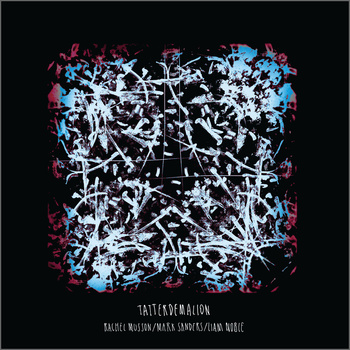
Short Take on Rachel Musson’s Tatterdemalion

I hadn’t encountered Rachel Musson‘s music until a few months ago when I found two tracks she posted on Sound Cloud, as a foretaste of her new album Tatterdemalion (on Babel, available through bandcamp.com); these tracks are a pair of live recordings of extended electric free improvisations from a set at the Vortex in London by her trio with keyboardist Liam Noble and percussionist Mark Sanders. The performances are electric in more than one sense: they’re charged up and plugged in, but they’re also electrifying to hear. Musson’s edgy confident tenor saxophone lines cut across thick noisy substrata, layered swathes of electroacoustic rumble and skirl produced in tandem by Noble and Sanders. Their music instantly caught and kept catching my attention, with its whelming surges of volume and space, of scrabble and hum. The studio recording on CD retains plenty of the tattering energy of the live date. As I listen through the album, I find myself more and more convinced that I am hearing an important and powerful collaboration emerging into the open. 
From the outset, Musson’s overtone-rich tenor hews closely to the kinds of searching tonalities that Evan Parkeror John Butcher have been pursuing, but she evinces a more deliberate sense of melodic line than either of them might. Noble and Sanders create gradually thickening surges of sound underneath Musson, who has a tendency to worry at discrete phrases and figures, repeating them with incremental shifts in pitch and pace, as if she were trying to secure successive fragments of melody within an unruly welter of electronic buzz and percussive thrum. At times, the trio recalls Ellery Eskelin‘s longstanding group with Andrea Parkins and Jim Black. Sanders is less polyrhythmically driven than Black, less figurally definitive, his sense of pulse more distributed, organic and unresolved. A number of the intenser passages throughout the record invoke the more voluble moments of Paul Motian’s trio with Joe Lovano – Musson’s saxophone timbres are sometimes remarkably close to Lovano’s depth of horn – and Bill Frisell’s feedback-soaked, obliquely dissonant guitar: I hear echoes of “One Time Out,” for example. I know Liam Noble’s playing from his collaborations with Ingrid Laubrock or from his 2009 trio outing Brubeck, an excellent tribute to the American jazz icon. But he deploys electronics here in ways that shift his personal idiom considerably, I think.  The admixture of bent sine waves, feedback and what sounds like an electric piano recall some of Chick Corea’s more radical forays on the Wurlitzer in Miles Davis’s 1969 quintet. Musson plays tenor on most of the seven tracks, taking out her soprano for the third piece, “The Blue Man.” While the album’s title suggests raggedy dissipation, the procedure for each section of what feels like an extended improvisational suite is similar: “The Blue Man,” for instance, begins fairly muted, the musicians coaxing their instruments forward and feeling their way into a shared soundscape. As the work expands, noise and texture start morphing into discernably shaped – shaping – sound, finding bits of intersecting, if contingent, musical form. At times meditative and withholding, as on “The Blanket Feels Woollen,” but more often building to an assertive density, this is vigorous, confident, restless, searching, extemporaneous music of a very high order.

Sound Tracks: Elizabeth Bishop and Lavinia Greenlaw

This is the text of a colloquium presentation I gave for the Department of English at UBC on 16 March 2012. Please pardon the formality of the MLA style — I decided to put it up on the blog rather than on academia.edu because of its autobiographical content, because of its closely contemporary subject matter, and because it’s still underdeveloped as an academic paper. There are probably also a few formatting glitches; my apologies, I’ll try to correct those. I hope it’s of some interest.
When I try digging through swelling shelfloads of criticism and secular hagiographies that, by her 2011 centenary, have become associated with Elizabeth Bishop, it starts to sound like those of us who read her, and who try to read her “straight through,” have a pressing and symptomatic need each to have our own particular Elizabeth, to craft from her work a genetics of voice to which we can belong, as recombinant latecomers. I want to explore one such attachment today, through the poetry and electroacoustic work of Lavinia Greenlaw – or maybe two such attachments, including my own. It seems to me, though, that it’s important to acknowledge that while many poets have been and continue to be reclaimed, repurposed and tentatively canonized, Bishop forms a particularly crucial case, if for no other reason than her writing practice assiduously troubles and even resists such claims, such figurative colonization, with its deliberately dislocated and dislocating geographies, – or, perhaps better put, with its careful unmooring of what Bishop calls “the family voice / I felt in my throat” (Poems 181).
We’re told Elizabeth Bishop disliked the sound of her own voice. She “read her poems with reluctance in public,” writes J. D. McClatchy in his notes for Random House Audio’s The Voice of the Poetseries, “and she loathed being recorded” (9). She also typically refused permission to tape her readings, although recordings made for Robert Lowell in October 1947 when he was poetry consultant at the Library of Congress (a post for which he would recommend Bishop two years later) provide some source material for this audio compilation, officially issued for the first time only in 2000, after extensive pleas by editors and admirers to Bishop’s reticent estate. Listening to her awkward, plainspoken delivery and to the audible traces of her anxiety, Bishop’s pronounced distaste for her own untrained verbal performances seems justified enough. In a letter to Joseph Summers sent from Halifax, Nova Scotia in August of that same year, Bishop refers disparagingly to “records I made for [Jack] Sweeney” at Harvard in 1946, which she hears as “pretty dreary” (One Art 149). Conversely, she praises Sweeney’s recordings of Lowell, whom she had just met through Randall Jarrell in New York in May 1947: “they aren’t at all professional, but they are extremely good in parts.” Lowell’s own invitation to record her reached her in September, just after her second sojourn in Nova Scotia. Their correspondence had begun in earnest that summer, with Lowell following up on a review by him of her North & South, and, more significantly, responding enthusiastically to the publication in The New Yorker of Bishop’s Nova Scotia poem “At the Fish-Houses [sic],” which had appeared in the August 9 issue: “The description has great splendor,” he writes, “and the human part, tone, etc., is just right” (7). That very human, tonal restraint is clearly also what Lowell hears in Bishop’s voice, and his invitation – which he politely asserts she doesn’t have to accept – is coupled to a plea that she might “oust some of the monstrosities on [his] list” of overblown poets he feels obliged to record (8). The recording session did take place some time on or around October 17, and Lowell enthuses in a letter to Bishop on November 3 about the excellence of a number of her readings:
I’ve at last heard the records and some of them couldn’t be better – “Faustina’s” the best I think, but “Sea-Scape,” “Large B. Picture,” “Fish,” and “Fish-Houses” are wonderful too. “Roosters” is swell in places and not so hot in others. Anyway you’ll get them in a few days and can judge. (11)
Lowell goes on to apologize for some technical shortcomings in the recordings themselves, and laments that “perhaps they won’t do for publication,” which in fact did not happen until the 2000 audiobook. The reasons for his enthusiasm aren’t ever made clear; nevertheless, I don’t think he’s just being polite. There is something poetically remarkable about these awkward, inadvertently suppressed records.
That something might be called their resonance, though I have to be careful to define what I might mean by that term, which seems odd in the context of Bishop, and of these readings. Jo Shapcott describes hearing Bishop read in a “deep rich voice” in the late 1970s at Boston University, but this is surely a combination of mistaken memory and a desire to heighten the posthumous heft of Bishop’s “strange, precise, profound poems” – their poetical depth (113). Profound seems to me precisely the wrong word for what Bishop does. Bishop’s voice, based on the surviving tapes, was never especially deep or rich, but always reticent, diffident and withheld. (Ruff a bit more kindly attributes this shyness to a combination of anxiety and asthma, but I hope it’s clear that it’s not my intention to criticize Bishop for reading poorly or for being somehow shallow: on the contrary, I want to pursue the poetic rightness of what she does achieve.) This hesitancy was a hallmark not simply of her speech, but of her poetics: “I’ve always felt that I’ve written poetry more by not writing it than writing it,” she famously tells Lowell in a letter of 21 January 1949, after she herself had, with characteristic reservation, assumed the poetry consultant post at the Library of Congress two years after him. Voice acts both as a harbinger and as a disavowal of self, of what it is to be and say an “I,” an Elizabeth: to speak oneself into external being. As James Merrill among many other has noted, Bishop’s “I” – especially insofar as it remains implicated in personal history, in memoir – models what feels like a formalized disavowal, a writerly reserve:
I think one saw the possibilities, perhaps through Elizabeth Bishop, where “I” could be used with the greatest self-deprecation, humor, a sort of rueful sense of “Well, yes, I did this, but you know what to expect of me.” (Neubauer 85-86)
Deeply suspicious of both the confessional and the expressive, Bishop does not consistently retreat into the detachment of craft, but tends instead to dwell poetically in the tense uncertainties between bios and graphē, the written and the lived.
The year 1947 is significant for understanding the specific genetics of Bishop’s voice, what Michael Donaghy calls her “accent” (Shapcott   ). The summer and fall of that year would see the second of her return visits to Nova Scotia after the death of her mother, trips that would provide Bishop with raw matter for many of the poems and stories she would write until her death in 1979. In the final lines of her New Yorker poem, “At the Fishhouses,” she writes herself – distanced a little into a “we” that collects her enunciative I and the readerly you – into what becomes a maternal, liquid and lapidary Atlantic physiography:
         It is like what we imagine knowledge to be:
         dark, salt, clear, moving, utterly free,
         drawn from the cold hard mouth
                  of the world, derived from the rocky breasts
                  forever, flowing and drawn, and since
                  our knowledge is historical, flowing, and flown. 
                             (Poems 64)
“I have seen it,” she tells us, “over and over, the same sea, the same, / slightly, indifferently swinging above the stones” (63). Hands and tongues, she says, are not so much nursed on saltwater as burned by it, marked by its hard indifference. Bound to our historical and genetic limits, we are incised by but also finally lost to oceanic depth, to “what we imagine knowledge to be” rather than what we can in fact ever know. Brett Millier, like Shapcott, falls into clichés of profundity when he describes Bishop’s first visit to Nova Scotia – involving visits to Halifax-Dartmouth and to Cape Breton – after the death of her mother:
From the many notebook entries of this summer [1946], and the poems that grew from those notes, it seems clear that the trip [to Nova Scotia] was both deeply disturbing and deeply significant to Elizabeth in ways that it would take her years to articulate. (Millier 181)
Poems such as “At the Fishhouses” and “Cape Breton” had their origins in these notebooks, and certainly do speak to Bishop’s tenacious attachment to Nova Scotia as her genealogical locus. Under her yearbook photo from Vassar College, for example, Bishop lists “Great Village Nova Scotia” as her home, while in fact she had lived there only from age 3 to 6 with her maternal grandparents. As Lavinia Greenlaw puts it, “while [Bishop] is justly celebrated as one of America’s most important poets, it was not America that formed her.” Greenlaw – whose poetic enmeshment in Bishop’s work I will soon come to – recasts “At the Fishhouses” to explain the internals tensions within Bishop’s poetic voice, as an effect of cultural genetics, of what Bishop herself might calls the “question” of how she travels, and the complexities of rootedness and uprooting:
The young Elizabeth stayed with her grandmother for just three years but retained her connection with Great Village all her life. Nova Scotia is the setting for many of her best poems, and its geography of vast skies and wild Atlantic coastline is present as a sense of being on the edge of something deep and dangerous into which she might disappear and into which she might want to – an ambivalence that is one of the most striking aspects of her writing.
The hyperbole here, while perhaps warranted by the occasion of an effusive book review, is wholly out of step with Bishop’s poetic, although we can certainly hear the echoes of the ironically-framed sublimity at the close of Bishop’s poem (as well as the falling from the world that informs “In the Waiting Room”). Greenlaw isn’t wrong to affirm that Bishop’s writing is marked by Nova Scotia; but if you have ever been to Great Village, you will know that it is hardly a place of vast skylines or wild coasts. (These stock-phrases sound more to me like the figural language of Canadian tourism.) The disturbances, instead, are much more closely personal and, importantly, accentual.
         In a 1947 letter to Lowell, Bishop remarks – coincidentally, in a paragraph immediately following a description of having herself recorded “like a fish being angled for with that microphone” – on the “strange rather cross-sounding accent” of Cape Bretoners, a hybrid of something “Gaelic,” “Scotch” and “English,” she thinks (147). What I hear in Bishop’s voice on those Library of Congress records, after her return from two summers in Nova Scotia, aren’t anything so overt or so strong as those Anglo-Celtic brogues, but I do hear the pronounced and, to me, self-evident traces of time spent in the Maritimes. Her voice obviously – obvious, perhaps, to anyone who’s from there – migrates and shifts through an inconstant array of East-Coast inflections. When I first heard these readings, I thought Bishop sounded like my grandmother, who comes from Yarmouth, Nova Scotia, and of whose voice I have a cassette tape, still. There is something in the way that both Bishop and my grandmother pronounce their Rs, pulling the rhotic slightly back, swallowing it just a little, to create what linguists call, if I’m not mistaken, a rounded retroflex approximate – which is a fancy way of saying an east-coast R, an inflection that among others you can still hear in recordings of Bishop.
I have to pause here to tell you a story, a story about me. My reading of Bishop has an even more personal angle than its link to my grandmother’s recorded voice – it connects to my own colloquial speech genetics, too. Here is my story. I was presenting a paper at a conference at UC Santa Cruz – the American Pacific Southwest – in December 2009. The paper was on the poetry of Charles Simic and its relationship to the music of Charles Lloyd. At one point in the talk, I discuss Simic account of hearing Thelonious Monk play in a New York bar. At the end of my talk, I took questions, of course, anticipating discussion of improvisation and aesthetics, or the complex relationships between music and poetry. A younger colleague of mine put up his hand and asked: “Are you from Nova Scotia?” I was a bit dumbfounded – “What?” “Are you from Nova Scotia?” he repeated: “you said baerr.” Apparently, despite a continent of distance and a good two decades of life elsewhere, my mouth still betrays my adopted origins. It’s been ingrained, coded into my tongue. So too, I think, it might be with Bishop. Leaving Great Village at six, she never can shakes its inflection, shoring against her embouchure.
2.
Lavinia Greenlaw is one of a number of younger British poets who claim Bishop as an influence. She has written numerous reviews of Bishop’s work, has produced a audio documentary for BBC Radio 3 on Bishop’s childhood, and, perhaps most significantly, has directly repurposed and reworked a number of what you might call Bishop’s keywords into the core of her own work: “Questions of Travel,” “The Casual Perfect,” and others. But Greenlaw is more than a fan, and “influence” is hardly the right term for her relationship with Bishop’s work. Greenlaw has remained a decidedly London-based writer, but her interests tend to gather around resisting the genetic determinants of her Anglocentrism. Her voice characteristically oscillates in her writing, a crucial ambivalence that has frequently been misread by reviewers of her work as hesitancy, between where she comes from and where she’s looking to, between the way she speaks and what she hears.
The Importance of Music for Girls, Greenlaw’s disco-punk memoir, begins with an account of her own near-death at age 4 when her mouth was accidentally pierced by a length of bamboo garden cane: “It could have affected your speech,” her mother tells her, “by changing the shape of the roof of your mouth” (3). Voice is both determined and deformed by her domestic, maternally-governed backyard. I want to claim that the difficult vagaries of Bishop’s accent, its complex dislocations, help to explain something of Greenlaw’s fraught lyricism and her attention to the displacements of public, performative language. Greenlaw’s shape-shifting elocution involves a recombinant genomics that synchs her to a poly context in which the dislocations and displacements of recording technologies come to inform how we sound ourselves.
Greenlaw’s poems resonate with Bishop’s, or perhaps alongside them. “Millefiore,” a lyric from Greenlaw’s 1997 collection A World Where News Travelled Slowly, thematizes resonance – as the sympathetic material attunement of molecular glass with intensified sound – but also recovers a fractal sounding, a version of the disavowed recorded voice that I have been tracing in Bishop’s poems. “Millefiore”’s dedication to the Scottish poet Don Paterson, who happens also to be an accomplished jazz guitarist, suggests that Greenlaw wants self-consciously to re-frame an ars poetica here, but a poetics that is at once intermediate and multimodal, aspiring conditionally to the feel of vocal music. The glass eye described in the lyric is “vitreous not ocular,” externalizing its opaque substance rather than pretending to be an organ of vision: neither poor prosthesis nor crafty fake. The inherent fluidity of glass – which as the long viscous drip of cathedral windows remains us, is not solid but a silicate liquid – allows the eye to hold rather than transfer the light of “everything,” but also enables it materially to oscillate, and Greenlaw imagines the eye recreating the ceramic texture of millefiore, an interlace of a “thousand flowers.” Despite its lyric trappings, this is not the visionary sublime, but a material registering, a sonogram, of someone’s artful voice: that is, it’s a glass phonograph. The inscribed sound-waves are apparently unplayable, vibrating senselessly in a dysfunctional skull socket. But in registering the limits of that listening, of what’s knowable, in the lyric textures of her poem, Greenlaw produces what she would later term an “infinite [as in, non-finite?] proximity,” a collision of the immediate, embodied auditory and the mute, representational visual at, and in, the virtual surfaces of poetic text. In her review of Exchanging Hats, a posthumously-published collection of Elizabeth Bishop’s paintings (which Greenlaw calls “poems made in pen, ink and water”), Greenlaw takes Bishop’s seeming lack of painterly technique, her uneasy primitivism, more deliberately as emerging from Bishop’s poetics of disavowal: “The wobbliness of it all is her argument with what the eye expects, how the eye wants to tidy up what is really seen.” Both Greenlaw and Bishop have sometimes been castigated for a forced formalism, a willful tidying up; in fact, the work here dwells not on the well-turned artifact, but in the argument itself with form, what David Kalstone presciently names Bishop’s “becoming a poet,” rather than ever her claiming actually to be one.
The open-ended discovery of an unsettled and unsettling poetic voice is mapped as a kind of mistaken listening, a creative misprision, in an episode from Greenlaw’s The Importance of Music to Girls, in which she outlines her first encounters with recorded music, specifically Bob Dylan’s Nashville Skyline. As a child overhearing her parent’s music, she admits that she can’t quite make out the words to “Lay Lady Lay,” which she hears as “lay, lay, delay.” This goofy distracted mistake becomes foundational to her own work as a poet – with the book open in front of us, we overhear, at a silent remove, the moment at which she first feels her way toward a poetic re-making of language, its resilient fluid stuff. There is also a specific lyric temporality, its “delay” – her own version of a Bergsonian durée– that can only come from not understanding Bob Dylan, not hearing him correctly. Significantly, there is also a peculiar genetics of accent at work in her description. She transliterates the surreal nonsense that she hears in Dylan’s lines: “brass bed” becomes BRA SPED. Admittedly this isn’t IPA, and I’m putting some undue pressure on the accuracy of her transcription of her own audition of the song, but Dylan does not say or sound out “BRA,” ever, in the song. In a peculiarly throaty falsetto, he sings with a nasally Midwestern American accent something like “BREH.” I don’t mean to criticize Greenlaw’s ear at all by nitpicking this way; what I do want to notice is that she overlays her own London accent onto Dylan’s voice – she hears her own inflection, herself, re-sounded on Dylan’s very strange, idiosyncratic vocal performance. She has Dylan intone, like a slightly posh Londoner, BRAWSS. This imposition might be understood as antinomian, as reciprocal to the traces of Nova Scotia we can detect, liminally, in Bishop’s 1947 recordings. Greenlaw’s accent goes in the opposition direction, expressed rather than impressed. But it nonetheless re-casts that wobble as reciprocity, as give-and-take rather than determinism – regardless of what trajectory any tidy closure might follow.
I have taken too much time already, and there are numerous significant collisions and collusions with Bishop in Greenlaw’s poetry, but I want to conclude with a brief description of a recent electroacoustic project undertaken by Greenlaw at two railway stations in England, Manchester Picadilly and London St. Pancras, called Audio Obscura. Greenlaw created two audio installations which recorded the random chatter of travellers on their way through a rail station; that chatter was then edited to script and re-recorded by voice actors, and the resulting audio tracks made available for listening (on personal audio players with earphones) to passers-by in the stations in which they originated. In a print version of the transcriptions, which have been aggregated and shaped into fragmented lyrics, Greenlaw asserts that she has mined a kind of verbal DNA, caught in passing, and distilled a poetry that exists between vox populiand the solitary lyric voice. The resulting pull between close attention and diffused distraction, she suggests, enacts the subjective becoming of poetic voice, as its texts “hover between speech and thought,” or “somewhere between what is heard and what is seen, what cannot be said” (6). The texts themselves, as concatenated fragments, incline toward the legibility, the sense, promised by a poem – they look like poems – but finally resist hermeneutic finality:
Most of us don’t set out to scrutinise those around us or to listen to their conversations yet we find that faces, gestures and phrases stand out and are remembered whether we like it or not. Things catch our attention because they raise a question and fail to answer it. We are left in suspense. (4)
Those unanswered questions derive for Greenlaw directly from Bishop’s questions of travel, which Bishop distils into one key interrogative in her poem: “Should we have stayed at home and thought of here?” (Poems  ). Home becomes unheimlich, dislocated and disturbed in under Bishop’s scrutiny. Or, in Greenlaw’s hands, interstitial, transitional. Her set of glosses on William Morris’s Icelandic journal, also published in 2011 alongside Audio Obscura and The Casual Perfect, involve Greenlaw taking up phrases from Morris’s prose and writing her way across and through them, not so much as explanation or expansion, not footnoting, but to recognize the intersubjective disturbance, the wobbles, of travelling. For her, Morris offers
the document of a journey that becomes a description of all journeys: the tensions that set in once the decision has been made, the hope that something will keep you at home coupled with the fear of missing your plane or boat or train, the realization that you are dis-equipped however much luggage you have brought along with you, the dropping of habits and co-ordinates, the ease with which you cobble together new ones, and the point at which you stop travelling and start heading home. (xxiii)
 That turning point, that peripety, is where the voice, both for Bishop and for Greenlaw, feels its way into audibility, into view.
Books and Such
Bishop, Elizabeth. Poems. New York: Farrar, Straus and
Giroux, 2011. Print.
– – -. Exchanging Hats: Paintings. Ed. William Benton. New
York: Farrar, Straus and Giroux, 1996. Print.
– – -. One Art: Letters. Ed. Robert Giroux. New York: Farrar,
Straus and Giroux, 1995.
Greenlaw, Lavinia. The Casual Perfect. London: Faber, 2011.
Print.
– – -. A World Where News Travelled Slowly. London: Faber,
1997. Print.
– – -. Audio Obscura. East Anglia: Full Circle Editions,
2011. Print.
– – -. The Importance of Music to Girls.  London: Faber,
2008. Print.
Kalstone, David. Becoming a Poet: Elizabeth Bishop with
 Marianne Moore and Robert Lowell. New York: Farrar,
Straus and Giroux, 1989. Print.
Millier, Brett C. Elizabeth Bishop: Life and the Memory of It.
Berkeley: U of California P, 1993. Print.
Shapcott, Jo, and Linda Anderson, eds. Elizabeth Bishop: Poet
         of the Periphery. Newcastle: Bloodaxe, 2002. Print.
“Sweeney, Jack and Maire.” Archival Finding Aid, University
Travisano, Thomas, with Saskia Hamilton, ed. Words in Air:
 The Complete Correspondence of Elizabeth Bishop and
Robert Lowell. New York: Farrar, Straus and Giroux,
2010. Print.

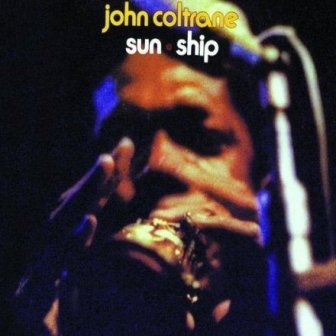
Short Take on John Coltrane, Sun Ship: The Complete Sessions

I have it from a reliable source that at one point during his speech at the ACRL conference in Indianapolis this past March, Henry Rollins re-emphasized the significant impact on his life of the music of The Clash and of the music of John Coltrane. The latter might be a bit surprising, although Rollins did record Everythingwith Charles Gayleand Rashied Ali in 1996, so Coltrane has been with him all along. He has said that he first heard Coltrane from records his mother owned, but that what he took from Coltrane’s music wasn’t spiritual or even musical, but a kind of directness, a fierce honesty that models intense communication: “I am not a musician. I have written a lot of songs but it’s just to get the words out. I always admired Coltrane for his truth and his purity. He was really going for something. He is inspiring because you can tell every moment he plays is sincere. I have never heard anything like it.” (The same thing might even be said for Joe Strummer’s gruff, insistent, committed vocals.) As far as my own listening goes, I think I have been struggling (or maybe something less agonistic: aspiring) to reconcile the collisions of Coltrane and The Clash, conflicted aesthetics aimed at what I tend to divide into the transcendent and the world-bound, the excessive and the mundane, contemplative restraint and expressive intensity. One conceptual trajectory that might bridge such bifurcations is the idea, and the practice, of what I’d call commitment. It became a key word in my Embouchureproject, and it makes a kind of sense, for me, to re-invoke it here. One of the reasons I have picked up on what Henry Rollins has to say about Coltrane’s music is that his tastes, his preferences, seem to coincide with my own: he says he is most drawn to late Coltrane, post 1964. And he’s consistently skeptical about any all-too-easy professions of enlightenment or poetic transport: he’s no mystic, but a demystifier. That doesn’t make his work any less searching, any less committed to honest, hard engagement with a will to truth, to truthfulness. But it does depend on how you understand what and when and how that truth might be.

The recent release of the “complete” studio recordings for John Coltrane’s Sun Ship – first issued in edited form posthumously, in 1971 – aims materially toward full disclosure of historical and music fact, to paint a vivid, truthful sound-picture of the improvisatory collective creative process of the Coltrane-Tyner-Garrison-Jones quartet by offering for public issue every listenable scrap of music and studio chatter extant on tape. This is definitely a music of plenitudes: the huge swathes of saxophone, the dense piano, the rolling bass-lines and the surging drums characteristic of the quartet’s last days together, and of the music Coltrane made from 1964 until his death in 1967. The session that produces Sun Ship takes place on 28 August 1965, and, apart from a first pass at the “Meditations” suite on September 2 (issued later as First Meditations), this is the last time the “classic” Coltrane quartet will record together as a unit. (McCoy Tyner and Elvin Jones will leave in November, replaced by Alice Coltrane and Rashied Ali: all of this information is well-known, and well-circulated.) So in so many respects, this music has immense historical value and interest, and every detail is worth hearing. Even the fragments and outtakes can be heard as stunning performances unto themselves. The false starts and apparent missteps overflow with powerful, potent music. Everything happens.

         It’s tempting to want to hear what Walter Benjamin might have called a messianic totality in these recordings, a vital archival gathering of historical minutiae – the digital imprint of every essential sonic particle – into an absolute and audible present. We can imagine ourselves there, as we listen – or can imagine the “there” of those searching performances now here, relocated in our own immediate moments. That’s how recording works, sure, but the idea of a “complete” package such as this one is to seem to place us, aurally, in close proximity to the music’s realization. And it works, of course: McCoy Tyner’s solos on both versions of “Sun Ship” are astounding instances of extemporaneous dynamism, but more than that they refuse to settle even on repeated listenings, re-creating the sound of surprise – at each return, they still never sound the same, even though they must be. Historical value collapses into what feels like an exploratory, unsettled present tense. Hearing Jimmy Garrison patiently evolve and re-shape his solo prelude to “Ascent” reaffirms his careful attention to depth of tone, to the rounded resonances of his instrument; in his ensemble work, too, I can hear foreshadows of William Parker’s elastic sense of time and line (in his recordings with David S. Ware or his In Order to Survive quartet). But that influence also seems to dissolve in the palpable immediacy of Garrison’s playing.

   What strikes me most about this session both works against and strangely reinforces this idea of a reanimated plenitude, of a musical Jetztzeit. A little of the studio banter was included in the original release of Sun Ship, but now most tracks contain extended snippets of “studio conversation”; rather than mar the music in any way – they don’t, of course – and rather than merely let us hear bits of the musicians’ speaking voices, as if they are with us again in our own sound-spaces, the loose fragments of casual chatter present a stark contrast to the intensities of the performances. The quartet can shift on a dime from chuckling about a track title to overwhelmingly powerful improvisation. How is it, I keep asking myself, that a music of such depth and wonder can co-exist so unproblematically with the casual and the mundane? Though maybe, maybe, that seemingly effortless coexistence is exactly what this music can teach us, can let us overhear.